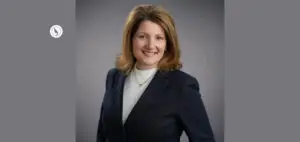
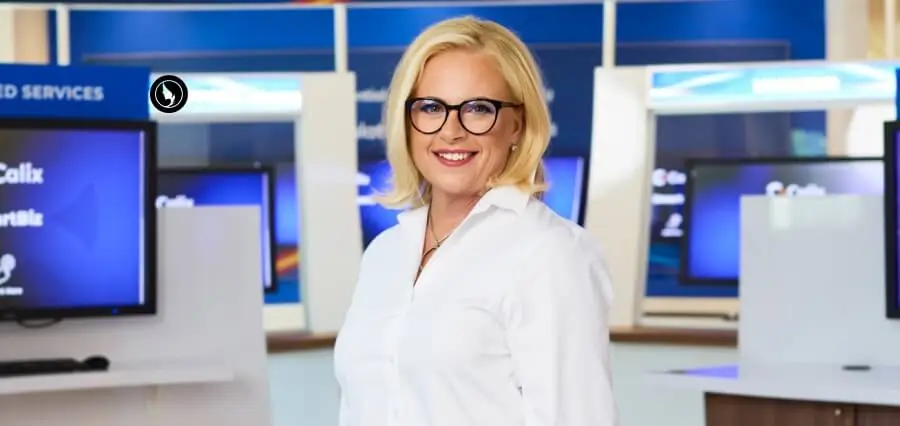
Sustainability takes shape long before an organization formally gives it a name. It emerges through everyday actions, responsible decisions, and a shared sense of purpose. For some leaders, the challenge is not to create that foundation, but to bring together the many elements that already support it. When Martha Galley stepped into her role as Chief Sustainability Officer at Calix, she quickly realized that the company was not starting from scratch. In fact, Calix had already been advancing sustainability across the organization for some time. Supply chain teams focused on resilience, product engineers worked to improve energy efficiency, and employees supported the customers and communities the company served. The work was already there. What was new was giving it a name and bringing it together under a clear sustainability strategy.
Bringing purpose to different efforts has become an integral part of her career journey. Her focus is on ensuring that sustainability is not treated as a separate initiative, but as an integral part of achieving the organization’s objectives. By working with various teams in product, operations, supply chain, finance, legal, investor relations, people and culture, and customer, she helps align expectations of the customers, investors, regulators, and employees with the priorities of the business. “Sustainability is not the goal in and of itself. It’s an important part of the method to achieve the mission of the company,” she says.
A Journey Shaped by Purpose
Martha’s path to sustainability leadership has not followed a traditional route. Her career has included strategy, customer success, business transformation, and sustainability. Although these roles may appear different, they have been guided by the same three principles: people, mission, and values.
Early in her career, she spent time at Microsoft, where she was inspired by the company’s ambitious mission to put a computer in every home and on every desk. She saw this as an opportunity to make technology more accessible and inclusive. She later joined Salesforce, where the belief that business should help make the world a better place reinforced an idea she already valued. Companies have both the opportunity and the responsibility to create value beyond financial performance.
This belief continues to shape her work at Calix. She believes that a person’s opportunities should not depend on their ZIP code. People living in rural communities, on tribal land, or in major cities should have equal access to reliable connectivity. Broadband can provide access to education, healthcare, employment, and stronger communities.
The COVID-19 pandemic made this issue even more visible. When people moved their lives and work online, broadband became more than a convenience. It became essential infrastructure that supported education, employment, healthcare, and everyday life.
Research from the Center for Rural Innovation further highlights the economic benefits of high-quality broadband in rural communities. The research found measurable improvements in wages, income, and new business formation after communities gained access to reliable broadband. This demonstrates the strong connection between digital access and economic opportunity.
An early interest in the transformative power of the internet also shaped her career perspective. As the internet changed global commerce and search engines made information more accessible, she noticed another important shift. Work was becoming less dependent on physical location. This change created an opportunity to build a fulfilling career while also making space for family and personal priorities.
For her, this flexibility reflects the broader potential of technology. It can expand access, create opportunity, and give people greater freedom to shape their lives. This belief continues to guide her work in sustainability and her broader professional journey.
Turning Strategy into Meaningful Action
A central theme in Martha’s career is her interest in turning strategy into action. She understands that creating a vision is only the beginning. The real challenge is helping teams, customers, and organizations understand it, adopt it, and apply it effectively. “I believe strategy only creates value when it is translated into meaningful action,” she says.
This challenge became clear when she was asked to drive adoption for more than 200,000 customers worldwide with a team of only five people. The assignment required a new approach. Instead of responding only when customers faced challenges, her team developed a proactive model. It supported customers throughout their journey, from implementation and adoption to value realization and renewal. The approach delivered strong results and established customer success and transformation as important themes in her career.
Her experience at Microsoft taught her discipline and how to lead without relying on formal authority. At Salesforce, she gained valuable insight into the growth of cloud-based customer success at scale. Her role as Calix’s first Chief Sustainability Officer has allowed her to bring these experiences together.
She views sustainability as a major transformation challenge. It requires long-term thinking, collaboration across functions, clear measurement, and strong leadership. It also requires organizations to balance business performance with a clear sense of purpose.
Empowering People
Martha takes the greatest pride in the impact she has created through people rather than revenue figures. She values the individuals who have grown stronger, the teams that have increased their impact, and the customers who have achieved their goals. “I measure my success by the people I help grow and the impact they go on to create,” she says.
A significant part of this work has focused on recruiting, developing, and retaining women in technology. She dedicates considerable time to coaching, mentoring, and sponsoring colleagues. She has also helped establish employee resource groups that support meaningful career development. Several people she has mentored have gone on to achieve milestones beyond her own. Many have also become lifelong friends.
At Calix, she describes the company’s approach as “sustainable by design.” The company develops products that are designed to remain in service for a decade or longer. These products are also engineered for energy efficiency. This helps customers reduce operating costs over time while lowering greenhouse gas emissions.
She is equally proud of the culture that supports this strategy. This includes mentoring emerging leaders, supporting women across the broadband industry, and encouraging employees to understand their role in sustainability. She believes sustainability is not the responsibility of one department. It is a shared responsibility across the entire organization.
Integrating Sustainability into Business
Martha’s career has focused largely on building and leading businesses rather than tracking emissions data. This experience shapes her approach to sustainability. She sees customers, investors, employees, and communities asking for greater transparency. They want to understand what companies deliver and how they operate.
She believes resilient companies are better positioned for long-term growth. Organizations also benefit from bringing together people with different skills, experiences, and perspectives. A diverse range of talent can strengthen businesses and help them adapt to change.
Her approach is to make sustainability part of the business model rather than treating it as a separate initiative. This means setting priorities that support business goals, measuring progress honestly, and ensuring that leaders across the organization understand their responsibilities.
She also recognizes that no organization has solved every sustainability challenge. For her, effective sustainability leadership is not about achieving perfection. It is about making steady progress, taking responsibility for results, and remaining committed to improvement even when the work becomes complex.
Leading Through Trust and Collaboration
Martha makes a clear distinction between managing and leading. In her view, leadership is earned rather than assigned. It is built on trust, keeping commitments, communicating honestly, and creating value for others. “Meaningful leadership is built on trust, clarity, and collaboration,” she says.
She believes collaboration begins with clarity. People need to understand what the team aims to achieve, why it matters, and how their individual contributions support the larger goal. Respect is equally important. No individual has a monopoly on good ideas. People are more willing to take risks and share their views when they feel genuinely respected.
Listening is another important part of her leadership approach. She asks thoughtful questions and ensures that people feel heard before decisions are made. This does not mean seeking consensus on every issue. Instead, it reflects the importance she places on the knowledge and experience within the team.
The strongest teams and partnerships are not built around titles. They are built on shared commitment, trust, and mutual support. For Martha, the best leaders stand behind their teams and support their people rather than standing in their way.
Advancing Responsible AI
For Martha, artificial intelligence is one of the defining developments of this era. However, she believes the technology itself is not the main story. What matters is how AI changes the way people work, make decisions, serve customers, and manage complexity.
She expects AI to become a regular part of everyday workflows. Rather than replacing human judgment, it can help people identify patterns earlier and focus more of their time on higher-value work.
She also expects technology and responsible business practices to become more closely connected. Companies will need to consider the environmental impact of digital infrastructure, the lifecycle of hardware, the ethics of AI systems, and the governance needed to use these tools responsibly. “Responsible AI is about more than what we can do; it is about how and why we use it,” she says.
For leaders, the important question is not only whether something can be done. It is also whether it should be done and whether it is being done responsibly.
Customers at the Core
Customer success has been a central part of Martha’s career. She describes her approach as fundamentally “outside-in.” Companies can easily focus on their products and internal processes. However, customers measure value based on how a solution supports their own business. They want to know whether it helps them serve their customers better, operate more efficiently, and achieve growth.
Much of her career has focused on encouraging organizations to spend less time promoting their products and more time understanding customer objectives. This approach helps companies demonstrate meaningful outcomes rather than simply completing implementation.
Achieving this requires strong feedback systems and a commitment to acting on customer insights. Customer feedback should not remain limited to support tickets or quarterly reviews. It should influence product development, operational priorities, and the way leaders define success across the organization.
Navigating Uncertainty
Every transformation ultimately depends on people. Technology and processes can be difficult to change, but gaining people’s support is often the greater challenge. Fear can arise when change feels uncertain or threatening.
Leaders cannot simply announce a transformation and expect people to embrace it. They need to address the questions employees are asking. These include why the change is happening, what will be different, what will remain the same, how progress will be measured, and where employees can find support.
In her experience, honesty often creates a more positive response than leaders expect. When people understand the challenges and uncertainties a company faces, they are more likely to work together to address them. Transparency can build trust and encourage collaboration during periods of change.
Whether the transformation involves technology, customer success, or sustainability, the underlying strategy may be clear. The human side requires more time, communication, and attention. For Martha, successful transformation depends on understanding and supporting people throughout the journey.
Advice for the Next Generation
When asked what advice she would offer aspiring women leaders, Martha keeps her message simple. Long and successful careers are built through intentionality, authenticity, curiosity, humility, and resilience.
These qualities have also shaped her own professional journey. Her career has not followed a fixed plan. Instead, it has been guided by a consistent set of values that she has applied to each new opportunity and challenge. This approach has helped her adapt, grow, and lead with purpose throughout her career.