
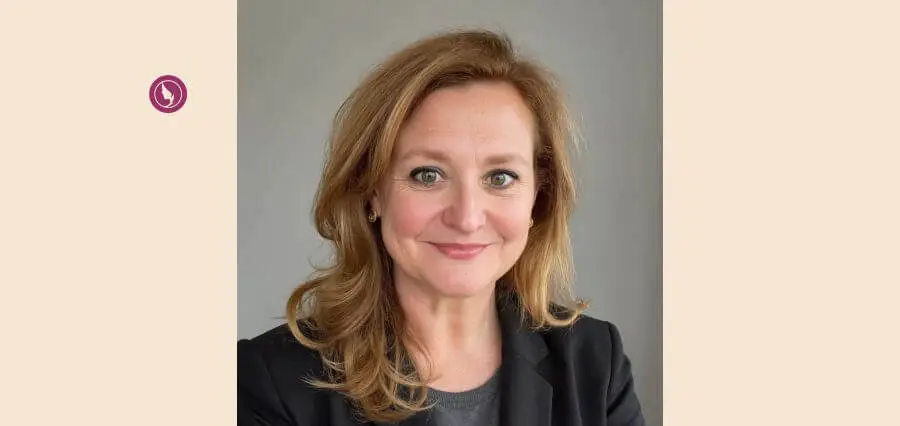
A brand goes beyond the image an organization presents to the market. It is shaped by the experiences of customers and employees and reinforced by the organization’s ability to consistently deliver on its promises. While many agencies begin with messaging, Michelle Marquardt, Director of Client Strategy at MarketDesign Co., begins with the people responsible for bringing that message to life. She looks beyond logos, campaigns, and positioning to determine whether an organization can deliver on the promises it makes.
In her role, Michelle helps technology and IT services organizations address challenges that extend beyond individual departments. Her work connects employer branding, organizational consulting, technology marketing, and talent management with broader business objectives. Some of the key questions she explores include: How should an organization define its identity? What changes should it make to support growth? Are its people, processes, and technology aligned with its ambitions?
Bridging Brand and Experience
Michelle developed extensive experience across brand, talent, technology, customer experience, communications, and organizational strategy. She began her career at Accenture, PwC, and AMS before moving into growing businesses. These roles showed her that organizations may manage these disciplines separately, but customers and employees experience them as one connected journey.
She explains this connection clearly. A brand promise creates an expectation. Employees must deliver on that promise. Processes and technology must provide the right support and tools. The employee experience then influences the customer experience.
Her work in employer branding further strengthened this perspective. She describes the employee journey through three simple needs: “Find and convince me, enable me, then support me.” A strong recruitment campaign can lose its impact when the candidate experience, onboarding process, or workplace culture does not reflect the promise.
This perspective has shifted her focus toward organizational strategy. Rather than focusing only on communications, she examines what enables an organization to deliver on its brand promise. People, processes, technology, and culture must align to create a consistent experience.
Brand as the Business Engine
Calling brand “the operating system of an organization,” Michelle has seen many companies reduce brand to visible elements such as logos, websites, and campaigns. She views brand more broadly as the set of expectations an organization creates and either fulfills or fails to meet.
If brand influences how an organization operates, it should guide everyday decisions. This includes what the company sells, whom it hires, which behaviors it rewards, and how leaders respond when challenges arise.
She identifies brand gaps by comparing what a company says, with what employees and customers actually experience. For example, a website may promote innovation, but that message loses credibility when employees lack the freedom or support to try new ideas.
Her approach is not about making company culture imitate marketing. Instead, she believes marketing should reflect the organization honestly and communicate a workplace and business that people can trust and choose.
Beyond Capabilities
A common pattern among IT services companies is to describe their businesses through capabilities such as cybersecurity, cloud, managed services, Microsoft, AI, and networking. Competitors often present similar lists, making it difficult for customers to see meaningful differences. “I want organizations to focus less on what they sell and more on what they help customers achieve,” she says.
Customers rarely buy a single capability, Michelle notes. They usually begin with a specific problem. They may need to open six locations by Friday, address a shortage of IT staff, or improve adoption of software their employees have already purchased. This is why she asks one question early and often: “What are you trying to achieve?” Positioning becomes stronger when a company moves beyond describing what it sells and explains what it is uniquely equipped to help customers accomplish.
Her team examines the customer, sales process, delivery experience, competitive landscape, and available evidence. Many companies already have meaningful points of differentiation. The challenge is that these strengths have not been clearly defined or communicated. Her approach remains focused on business results. Activity alone does not create value. Revenue remains the key measure.
Building Strategic Alignment
Leadership teams often agree on a goal but interpret it in different ways. Michelle developed an assessment methodology called MDCompass to identify these gaps. Instead of starting with a marketing plan, she interviews leaders individually across six areas: People, Process, Platform, Purpose, Plan, and Pipeline.
Clear patterns often emerge from these conversations. Leaders who believed they were aligned may reconsider their views when they compare their responses. The discussion then shifts from individual opinions to shared evidence. “Scorecards are about forward momentum,” she says, but only when they measure what matters.
She also brings alignment into daily execution. Teams define standards, clarify what successful delivery means, and establish reporting practices from the customer’s perspective. This creates greater consistency because teams work toward the same objectives. It also improves stability by clarifying priorities, responsibilities, and decision-making.
Navigating Change
A constructive approach to change focuses on understanding challenges rather than placing blame on employees. Instead, Michelle views resistance as valuable information. Employees may not understand the reasons for a change, or they may question whether leaders will follow through. A new process may also create additional challenges in their daily work. Some employees may have experienced previous transformation efforts that did not last.
She begins by assessing readiness and context. “I don’t want to build just to build,” she says. She first identifies what employees need to do differently, what continues to reinforce existing behaviors, and which capabilities may be missing.
Communication is important, but lasting adoption requires a broader approach. Leadership, processes, tools, incentives, skills, and measurement must work together to support meaningful and sustainable change.
AI with Human Insight
AI can strengthen professional judgment without replacing human decision-making. Michelle has developed AI-assisted methods that analyze executive interviews against defined organizational competency frameworks. These methods help identify patterns across large volumes of qualitative information, provide an additional way to test conclusions, and deliver robust rigor to data integrity. She has developed skills and prompts for AI tools to conduct research, add efficiency to campaign development, and to enable integrated performance trackers to measure profitability and quality, to manage the health of all the firm’s accounts.
For IT services and B2B technology companies, she sees significant potential in capturing knowledge that often remains with individual employees. AI can make this expertise easier to find, apply, and scale across the organization. The greatest value comes from knowing where AI can provide meaningful support and where human judgment remains essential.
Aligning Strategy and Growth
For Michelle, her experience at Accenture, PwC, and AMS developed a strong understanding of how different parts of an organization are interconnected. At the enterprise level, a change in one area can influence many others. A technology decision can reshape processes, while new processes can redefine roles and skill requirements. These changes can also influence recruitment and shape the experiences of employees and customers.
Smaller companies can move quickly, but rapid growth can expose structural gaps. She combines the discipline of large organizations with the agility of growing businesses. Rather than adding unnecessary bureaucracy, she focuses on creating the structure a company needs to support its next stage of growth. She also remains involved in both sales and delivery. This approach helps ensure that strategy reflects the practical realities of execution.
Scaling with Purpose
Michelle views growth as a strategic priority and stability as an operational requirement. “Growth is a strategy, while stability is an operation,” she says. Rather than treating them as competing goals, she sees both as essential to sustainable business development. Growth focuses on where a company is heading and what it needs to scale. Stability focuses on whether the organization can deliver consistently as it grows.
Challenges often arise when demand grows faster than the operating model can support. More customers can expose weak processes, while a larger workforce can reveal unclear roles and responsibilities. She challenges leaders with a practical question: “If revenue doubled tomorrow, what would break first?”
She does not expect companies to resolve every weakness before pursuing growth. Instead, she encourages leaders to identify which weaknesses could create serious challenges as the business scales.
Curiosity in Leadership
As a woman leader working across strategy, technology, culture, and marketing, Michelle places curiosity at the center of her leadership approach. “Curiosity allows me to ask better questions, challenge assumptions, and learn from perspectives beyond my own,” she says. She seeks to understand how the business creates value, why processes exist, and what other teams see that she may not.
She believes trust is built through honesty and openness. She communicates what she observes, supports her views with evidence, and listens to people with different expertise. She is also willing to change her perspective when new information supports a different conclusion.
For her, leadership is not about being the smartest person in the room. It is about creating clarity and an environment where people can contribute their knowledge, experience, and ideas.
Beyond Today
Looking ahead, Michelle expects organizations to become more deliberate about how work is designed and delivered. AI will change jobs and may also reshape the boundaries between them. Tasks will increasingly move between people and technology, creating new approaches to collaboration, accountability, and governance.
Employer brands will also face new expectations. Candidates will want to know whether companies will invest in their ability to adapt and whether technology will support employees or primarily monitor them. Marketing will evolve as well. As AI makes content easier to produce, volume will become less important. Distinctive thinking, credibility, and genuine expertise will become more valuable. Companies will also need to consider how customers discover them as search, AI assistants, and other channels continue to develop.
She believes organizations that adapt effectively will not simply be those that adopt new tools first. They will be the ones that learn, make informed decisions, and respond to change with consistency. This requires leaders who can create clarity while recognizing that they do not have every answer.
Lessons from Improv
Michelle’s approach is also shaped by her years of studying and performing improv in Chicago. The experience gave her a principle that continues to guide her work: How you do What you do is Who you are. She draws on the work of Viola Spolin, who emphasized how a character behaves in a scene can reveal how that character feels and understands the world.
She sees a similar connection in business. Whether the conversation begins with brand, growth, AI, talent, or transformation, it ultimately comes back to execution. Strategy creates value only when an organization can put it into practice. Her goal is to ensure that the way people work reflects the organization’s shared goals and values.