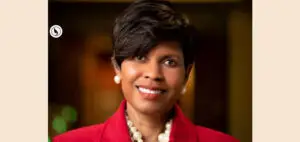
Effective companies are built on the strength, talent, and commitment of their people. Strong leaders turn strategy into action, while strong cultures lay the foundation for sustainable success. Katherine Armstrong views human resources as a strategic business function with a direct impact on organizational performance. Over the course of her more than three-decade career, she has focused on connecting people, leadership, organizational strategy, and business priorities. Currently, she serves as Senior Vice President and Chief Human Resources Officer of Churchill Downs Incorporated (NASDAQ: CHDN). In this role, she leads the company’s enterprise human capital strategy, supporting an organization of approximately 10,000 employees.
Her leadership style reflects a broader perspective on what contemporary human resources can accomplish. She views HR as a strategic partner that helps organizations navigate challenges and change while developing the leaders needed for the future. Her leadership has been instrumental in placing human capital at the center of organizational decision-making, positioning people strategy as an important driver of performance, resilience, and sustainable growth.
Leading with Purpose
Katherine’s path into HR leadership began with a simple observation: strategy rarely fails on paper; it fails when leaders cannot inspire people to execute it. “That realization led me to human resources, not as an administrative function, but as a business discipline capable of shaping enterprise performance,” she says.
Over the following three decades, she led transformational initiatives across financial services, hospitality, gaming, and global consumer organizations. She guided companies through mergers and acquisitions, executive successions, periods of rapid growth, and times of disruption. Each experience reinforced the same lesson: organizations do not change on their own. People do.
That belief continues to shape her leadership philosophy, which balances empathy with accountability. She believes high-performing cultures emerge when leaders genuinely care about their people while maintaining clear standards for performance, integrity, and execution. She views the CHRO’s role as creating the conditions in which both people and the business can succeed together.
Culture Through Leadership
Katherine Armstrong challenges the idea that culture is defined by engagement surveys or workplace perks. She views culture as the sum of behaviors that leaders consistently reward, tolerate, and model. A strong culture creates clarity and builds trust. It ensures that employees understand what success looks like, how decisions are made, and what is expected of them at every level of the organization.
She believes values matter only when they guide decisions, not when they remain slogans. Leaders bring values to life through everyday practices such as hiring, onboarding, succession planning, compensation, and performance management. Values displayed only on posters remain marketing statements. In contrast, values that guide promotions, influence decisions, and reinforce accountability become embedded in the organization’s culture and everyday practices. The most successful companies, she believes, build their culture with intention rather than allowing it to develop by chance.
Connecting Talent to Strategy
Keeping human capital strategy closely aligned with business priorities is central to Katherine’s approach. When her executive team discusses expansion, operational excellence, or shareholder value, the conversation naturally turns to talent. Key questions include whether the organization has the right leadership capabilities, whether it is structured effectively, and what skills it will need in the years ahead.
She evaluates every people initiative based on its impact on business outcomes. Improving customer experience requires leaders who can create strong employee experiences. Supporting growth requires stronger succession pipelines. Improving productivity requires organizations to rethink how work is done rather than simply reduce costs. When HR is fully integrated into enterprise strategy, it can become a source of competitive advantage rather than remain a support function.
Sustaining Leadership Excellence
Katherine Armstrong views succession planning as a strategic risk management priority rather than simply a talent development exercise. Boards increasingly expect organizations to identify critical roles, assess leadership readiness, and reduce the risks associated with unexpected transitions. Effective succession programs begin years before a position becomes vacant. They focus on developing future capabilities through cross-functional assignments, executive coaching, and broader exposure to the organization.
A common mistake is to equate high performance with leadership readiness. Strong functional expertise does not always translate into executive capability. “Leadership readiness requires more than strong functional expertise,” she says. Future leaders also need strategic thinking, an enterprise-wide perspective, influence, adaptability, and sound judgment under pressure.
The same disciplined approach applies to executive compensation. Pay programs should support business strategy rather than simply reward short-term results. They should be transparent, defensible, market-informed, and aligned with long-term value creation. As CHRO, she helps the board balance the interests of investors, executives, employees, regulators, and customers. Competitive compensation, combined with clear accountability, encourages leaders to focus on sustainable performance rather than short-term results.
Navigating Change with Confidence
Katherine Armstrong has developed a clear perspective on organizational change. She believes people do not resist change itself. They resist uncertainty. Successful transformations depend on leaders who communicate early, honestly, and consistently. Employees can accept difficult decisions when they understand the reasons behind them. She has learned that trust does not come from having perfect answers. It comes from transparency. “Trust does not come from having perfect answers; it comes from transparency,” she says.
She also emphasizes the importance of leadership visibility during periods of change. Employees pay close attention to what leaders do, often more than what they say. Consistency between words and actions builds credibility. Organizations that manage transformation successfully create stability through purpose, clarity, and consistent leadership.
This philosophy also extends to inclusion. She believes inclusion should be closely connected to business strategy. Organizations benefit when they draw on diverse perspectives, encourage constructive debate, and create environments where people feel respected and confident enough to share their ideas. Inclusive leadership can strengthen innovation, decision-making, collaboration, and customer understanding. The goal is to build cultures where differences contribute to performance rather than focusing only on representation targets.
Redefining the CHRO Role
Katherine Armstrong has seen the CHRO role evolve significantly over the past decade and has contributed to that transformation. Today, CHROs advise boards on succession planning, executive compensation, governance, and enterprise risk. Their responsibilities extend well beyond traditional HR leadership. She believes the strongest CEO and CHRO partnerships are built on trust, open communication, and shared accountability for business outcomes.
Her experience across hospitality, gaming, and consumer-facing businesses has also reinforced her belief that customer experience begins with employee experience. Employees who feel trusted and empowered are better positioned to deliver strong outcomes for customers. These industries have also highlighted the importance of leadership visibility. Effective leaders spend time where the work happens and engage directly with employees rather than relying only on dashboards and reports.
Elevating Women Leaders
As a woman who has reached the board-ready executive level, Katherine Armstrong offers practical advice to women pursuing senior leadership roles. She encourages them to build credibility through consistent execution and strong results. She also advises them to pursue opportunities before they feel completely ready. In her experience, many women wait until they meet every qualification, while others are willing to learn through experience.
She emphasizes the importance of developing strong business acumen alongside functional expertise. Building relationships across the organization is equally important. She also encourages women to become sponsors for others rather than focusing only on finding mentors. Boards increasingly seek leaders who can think strategically and bring a broad business perspective.
Looking ahead, she expects artificial intelligence to reshape how work is performed while making human leadership even more important. She believes companies will increasingly differentiate themselves through learning agility, adaptability, and the ability to navigate uncertainty. Future-ready organizations, she says, will place greater emphasis on reskilling employees and developing strong succession plans.
Driving Transformation and Growth
Churchill Downs recruited Katherine Armstrong in 2021 to establish a new Vice President of Culture role reporting directly to the CEO. She was tasked with developing the company’s enterprise culture and diversity strategy during a period of rapid growth. In 2022, she was promoted to Senior Vice President and CHRO after leading major culture transformation initiatives and expanding the company’s enterprise HR strategy.
Since she joined the organization, Churchill Downs has tripled in size through strategic acquisitions, continued expansion, and business transformation. She has worked closely with the Board and executive leadership team on several key priorities. These include advising the Compensation Committee on executive pay and incentive design, leading CEO and executive succession planning, supporting investor engagement and governance related to Say-on-Pay, integrating human capital into enterprise risk management, supporting executive protection and CEO security governance, and leading the enterprise-wide implementation of SAP as one of the company’s largest transformation initiatives.
Throughout her career, she has also led the people side of numerous mergers and acquisitions. Her work has helped leadership teams align organizational structures, integrate cultures, retain key talent, and accelerate strategic value. She believes successful acquisitions depend not only on financial performance but also on how effectively people, leadership, and culture come together.
Leadership and Recognition
Katherine Armstrong serves as a Board Director for the Leadership Louisville Center. She has also served as a Strategic Advisory Board Member for the West End School, supporting education and leadership initiatives for underserved youth. She regularly advises boards on CEO succession, executive compensation, governance, enterprise risk, and long-term talent strategy.
Her professional recognition includes the 2025 Enterprising Women honor from Louisville Business First, the Top 50 Women Leaders of Kentucky designation, and recognition as one of the Women We Admire Top Women Leaders. Louisville Business First has also featured her in its Executive Insights series. She regularly represents Churchill Downs at regional business events, including the Greater Louisville Inc. Annual Meeting, where she presented one of the organization’s Silver Fleur-de-Lis Awards.
A Master Certified Executive Coach, she has completed executive leadership programs at UC Berkeley Haas School of Business, Northwestern’s Kellogg School of Management, and IESE Business School in Barcelona. She holds a Bachelor of Science in Psychology and has also pursued doctoral studies in the field.
A Legacy of Leadership
Katherine Armstrong hopes to be remembered as a leader who helped organizations achieve exceptional business results by investing in strong leadership. She believes titles change, and strategies evolve, but leadership leaves a lasting impact on people. She measures her success by the extent to which she has helped leaders become more courageous, thoughtful, and intentional in developing others.
Her personal philosophy is simple: leadership is not measured by how many people report to you, but by how many leaders you help create. This principle has guided her throughout three decades of enterprise transformation. She continues to apply it as she supports Churchill Downs through its next phase of growth.