
Artificial intelligence has neither patience nor time. It operates in a way that makes other fields seem sluggish. It creates new guidelines that people have yet to finish digesting and penalizes those who take too long to act. For that reason, boldness and confidence abound. Prudence is challenging to find. In security, where the cost of misplaced confidence can be irreversible, trust is the scarcest resource of all. These are people who listen to understand rather than to respond. Where others enter a room focused on winning the argument or defending a position, they enter driven by curiosity, asking the clarifying questions that cut to the why, absorbing the full message before they react. Such people know the difference between something that can be deployed and what should be. They ask the questions others do not want to be asked and set up boundaries others would prefer to remain vague. However, because of how critical defense is, with no room for mistakes, the importance of these kinds of people can hardly be overstated.
The Bridge Builder
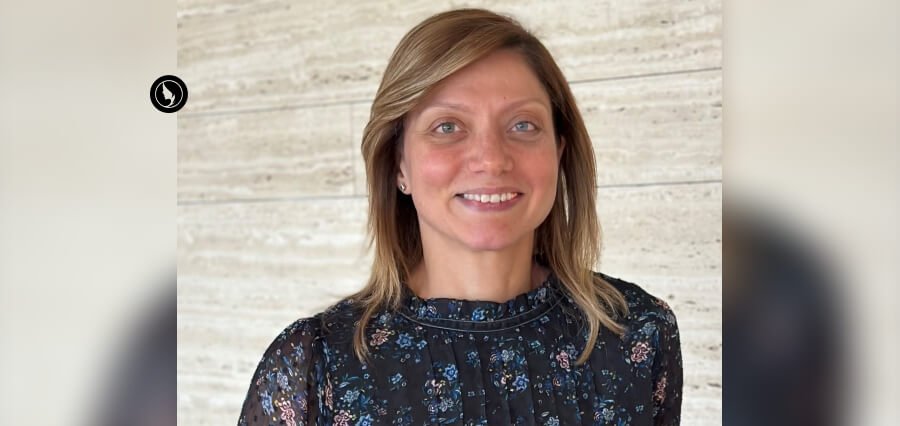
Rana M. Dalbah did not take a straight road into the world of AI. She studied Finance and Information Systems as an undergraduate and went on to earn a Master’s in Finance. By all appearances, her background had little to do with machine learning or defense technology. But those two decades Rana M. Dalbah spent working in data analytics gave her something that no engineering or technical degree could: the ability to sit between the business world and the technical world, understand both, and make sure they stay connected.
Most recently, as Senior Director of AI and Data Governance at BAE Systems, Inc., she built and led the governance frameworks and AI infrastructure that would come to define her approach to responsible, mission-critical technology. Today, she brings that same principled, trust-first methodology to her new role as Vice President, Enterprise Data Services & Enterprise Applications at Systems Planning & Analysis (SPA), a leading global provider of data-driven analytical insights for critical national security programs, headquartered in Alexandria, VA. There, she is responsible for the complete data value chain, artificial intelligence integration, and core corporate and mission applications. This isn’t accomplished by being the most technical person in the room but by being the most credible one — earning that credibility through relationships, through honesty, and through years of making sure nothing important gets lost in translation between the people who build the technology and the people who use it.
The AI Factory: When Constraints Become the Blueprint
When Dalbah’s team began building AI capabilities at BAE Systems, Inc., they ran straight into a hard reality. As a government contractor, BAE Systems, Inc. operates under strict compliance rules that limit which external AI tools and platforms the company can use. For many, that would have felt like a dead end. For Rana M. Dalbah, it became the design brief.
Her team built from the ground up. The result is what she calls the AI Factory, a purpose-built, vertically integrated computing infrastructure that runs the entire AI lifecycle inside BAE Systems Inc.’s secure environment. It ingests raw data, trains models, fine-tunes them, and delivers real-time inference, all without sending sensitive information outside the company’s walls. Not a single external system touches the core.
Every layer of the AI Factory reflects a principle that she holds firmly: a system must be explainable, auditable, and trustworthy before it is ready to scale. She calls this Defensive Governance. The premise is simple: speed without safety is not a competitive advantage. In the world of defense, where the consequences of a wrong decision do not come with an undo button, that is not just a philosophy. It is the entire foundation.
Humans First, Always
One of the most urgent questions in AI today is deceptively simple: when a system makes a decision, who is responsible for it? Rana M. Dalbah does not hesitate to say the human operator is always the ultimate moral and strategic authority. AI can accelerate the inputs to a decision. It does not get to make the decision.
In practice, this means designing systems with built-in escalation protocols where AI flags uncertainty, offers alternatives, and steps back so a human can take over at moments that matter most. Alongside the technical architecture, Rana M. Dalbah invests heavily in training. She wants the people who use these systems to engage with them critically, to understand what the AI is doing and why, and to never simply defer to an output they cannot explain or interrogate.
Rana M. Dalbah is also looking ahead. She believes the next frontier of responsible AI design involves systems capable of flagging their own anomalies and surfacing their own uncertainty before problems compound. These are tools for extending human oversight, not replacing it. The decision about what to do with a flag, how to address a bias, and what the ethical implications are will always remain a human responsibility.
The Dalbah Standard
Rana M. Dalbah has her own definition of when an AI system is ready to be trusted with real work. She calls it the Rana M. Dalbah Standard, and it has nothing to do with passing a benchmark. “A model is not mission-ready because it performed well on a test. It is mission-ready when the people who depend on it would genuinely stake their work on it,” she shares.
That standard shaped every decision her team made in building the AI Factory. They focused on making solutions easy enough for employees who are adapting to new technology, and clear enough for those who need to explain what they are doing to a client or a senior leader. The team built two pathways into the system: a drag-and-drop, low-code experience for people with domain expertise but limited technical background, and an API-connected route for engineers who want to build directly on the infrastructure.
The moment Rana M. Dalbah knew the standard had actually been met was not during a product launch or a leadership review. It was when a business unit took her team’s infrastructure and built something entirely on their own, something no one on her team had anticipated, and came back to show them what they had created. That is what the Dalbah Standard looks like when it works: not a declaration of readiness, but proof of it.
A Message for the Leaders Coming Next
When the conversation turns to the next generation of women leaders, Rana M. Dalbah speaks from a place of hard experience. She describes what she calls Trilingual Authority, the ability to communicate fluently with the business, the technical team, and executive leadership. She did not develop this skill in a classroom. She built it out of necessity. When walking into rooms early in her career, she was the least technical person there. She made a choice: listen rather than pretend. Ask the questions that feel too basic to ask. Over time, the bridge she built between those worlds became her signature as a leader.
Dalbah’s advice is straightforward. “You do not need to be an expert in the room. You need to be the most trusted person in it. Trust is built through relationships, honesty about what you know and what you do not, and consistently making sure that the people around you feel understood.”
The most difficult lesson she ever had to learn was that although she was correct about the hazards, her delivery of them was flawed. Before she had earned the relationship, Rana M. Dalbah entered with rules. She now realizes that the most knowledgeable leaders are not the ones that govern most effectively. They have the strongest connection.
Her advice: “Stop trying to be an expert. Become the connector. That is when doors stop being barriers and start being invitations.”
Calculated Audacity: The Art of the Right Leap
There is a phrase Rana M. Dalbah uses when people ask how she makes consequential decisions under uncertainty. She calls it calculated audacity. And she is careful to explain what that means. The leap is not reckless. It is the product of deliberate, anticipatory thinking, mapping out the possible scenarios, understanding the risk attached to each one, and making a clear-eyed call about what you can afford to get wrong and what you simply cannot. She thinks in scenarios before she thinks in solutions. That habit, she believes, is what separates a true governance leader from someone who simply enforces rules.
Rana M. Dalbah is focused on creating something specific: a future where AI earns its place not through speed or sophistication, but through the oldest and most reliable currency in any relationship, trust. In defense, as in life, that is the only standard that lasts.