
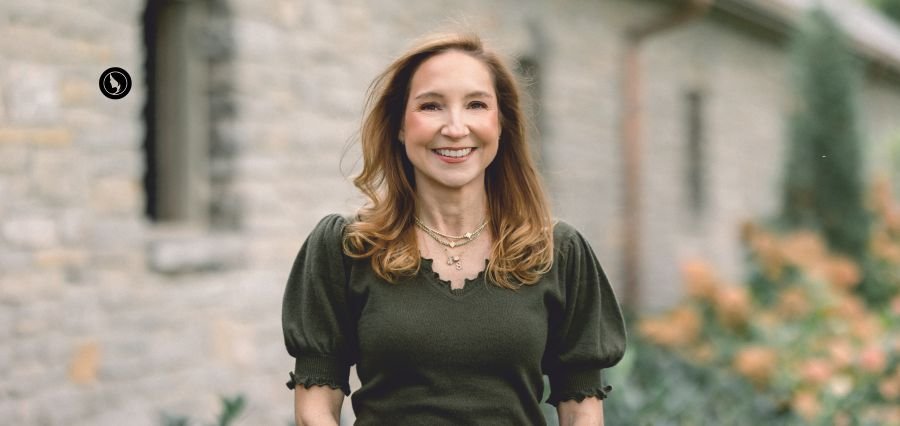
A quick internet search will tell you Hollie Harris is the first woman chosen to lead the 70‑year‑old Appalachian Regional Healthcare (ARH) system. It is an accurate distinction — but not one she dwells on.
“I’ve never viewed leadership through a gendered lens,” says Hollie, who has been serving as ARH President and CEO since April 2021. “When opportunities arise, I believe they should be awarded to the most qualified individual, based on capability and readiness to lead.”
That philosophy shapes how Hollie guides the ARH system — and how she wants to be experienced by those around her: approachable, grounded, and simply “Hollie” to the people she works alongside. Even as the head of one of the nation’s largest rural health systems — operating 14 hospitals and an extensive network of clinics and other services across southeastern Kentucky and southern West Virginia — she is intentional about ensuring her role never feels intimidating.
“It’s important to me that people feel comfortable approaching me,” she said. “I don’t want the title to create distance. I want them to see me first as a person — I’m just Hollie.”
For the communities ARH serves, that approach matters. Across the region, ARH is more than a place to receive care — it is a trusted presence, a major employer, and an anchor of economic stability.
Under Hollie’s leadership, that trust is being honored in ways both quiet and bold. Mobile clinics are reaching isolated communities. Kentucky’s first lifestyle medicine service line is taking shape. A disaster recovery center rose after historic floods. A $7.5 million venture fund is advancing rural healthcare innovation. Together, these efforts reinforce a truth the rest of the country is only beginning to understand: rural healthcare does not have to mean second‑best healthcare. It simply requires the right leadership.
Built From the Inside Out
There is a difference between a leader who studies a community and a leader who truly belongs to one. Hollie belongs to Appalachia in the truest sense — not by birth, but by commitment.
When she joined ARH as director of strategic planning in 2001, Hollie, a native of Colonial Heights, Virginia, had limited familiarity with the central Appalachian region ARH calls home. Eastern Kentucky and southern West Virginia were new landscapes, both geographically and culturally.
Today, she is deeply familiar with the winding country roads that connect ARH’s 14 hospitals. That understanding has been earned over 25 years of traveling for meetings, groundbreakings, celebrations, and essential in‑person visits that keep leaders grounded in the communities they serve and the employees delivering that care.
Her connection to the region has been strengthened by the depth of her leadership journey. Over more than two decades at ARH, Hollie rose through increasing leadership responsibilities, ultimately serving as chief of corporate strategy with oversight of marketing, business development, service excellence, philanthropy, government relations, and grants. Those roles shaped her understanding of the organization from every angle and grounded her leadership in both strategy and service.
When she stepped into the CEO role in 2021, her priorities were clear. She was not there to reinvent the historic organization. She was there to strengthen it — to protect access to care for families across the region and to build a health system capable of standing firm when times get hard.
“When rural hospitals succeed, communities succeed,” she says. “When access to care disappears, families often have nowhere else to turn.”
That belief guides every decision she makes. In Hollie’s view, a hospital in rural Appalachia is more than a building filled with beds and equipment. It is a lifeline, a major employer, and a community anchor. When it thrives, the community feels it. When it struggles, the consequences ripple far beyond its walls.
Balancing Mission With Reality
Running a rural health system demands resolve. High Medicaid enrollment, inadequate reimbursement, and medically complex patients are daily realities for ARH. Yet care does not stop. ARH shows up for its communities—every time.
Hollie is candid about what that commitment requires. She does not minimize the strain, nor does she allow it to dilute the mission. Instead, she has focused on building systems — and teams — designed to deliver care sustainably, with discipline and purpose guiding decisions across the organization.
As president and CEO, it is Hollie’s name most often associated with ARH’s successes. That recognition, however, has never been her preference. She is intentional about shared leadership, having worked to build a strong senior leadership team and create pathways for growth similar to those that shaped her own career. In Hollie’s view, lasting progress in rural healthcare is never driven by one person alone, but by empowered teams aligned around a common mission.
That philosophy is evident in how ARH operates. The system participates in an Accountable Care Organization partnership with Main Street Health, a model that prioritizes coordinated care and quality outcomes over volume. The approach aligns clinical excellence with financial accountability, ensuring patient care and sustainability advance together.
The same thinking has reshaped leadership across the organization. A Division Chief Nursing Officer model brings nursing leadership closer to day-to-day operations, keeping patient safety and care quality at the center of decision-making. A Division President model structures leadership around the regions ARH serves, allowing local needs to be met with speed and relevance.
Programs such as 340B are also central to that strategy. They allow ARH to extend limited resources and reinvest savings directly into patient services and community health initiatives.
“Financial sustainability is not separate from patient care,” she says. “It is what makes patient care possible.”
Hollie leads with clarity and candor, sharing challenges as openly as successes and explaining decisions to both her teams and the communities they serve. In doing so, she builds trust that turns employees into partners and communities into allies.
Care That Starts Beyond the Hospital
Preventive care is central to Hollie’s vision for improving the health of some of the nation’s most vulnerable communities. In her view, improving health does not begin inside hospital walls, it begins with addressing the everyday factors that shape well‑being.
“Improving the health of our communities doesn’t truly start at the hospital,” she says. “It requires us to address nutrition, lifestyle, access to preventive care, and community resources.”
That philosophy has guided her work over the past five years and came to life in 2025 with the launch of ARH’s Mobile Health Clinic, which travels into the most rural communities—places where transportation barriers often lead to missed appointments and untreated conditions. In just over a year, the clinic has reached more than 30,000 individuals and delivered over 1,000 preventive screenings. ARH’s “boots on the ground” community development team has also far exceeded its annual screening goals at its regular events and other outreach efforts, extending care to people who might otherwise go without it.
Access to nutritious food is another foundational element of Hollie’s approach. She has made Food Is Medicine a defining initiative at ARH, expanding food security screenings, launching produce prescription programs, and developing medically tailored food initiatives to help patients manage chronic disease through nutrition. This work has brought together partners including Tufts University, the University of Kentucky, the Kentucky Department of Agriculture, the Kentucky Hospital Association, local farmers and cattlemen, food banks, and community organizations.
ARH has also partnered with God’s Pantry Food Bank to recover surplus food from retailers and distribute it to families facing hunger throughout the region. These collaborations reflect a truth Hollie holds firmly: lasting health improvements in Appalachia require meeting people in their daily lives, not just in clinical settings.
That same preventive focus guided the launch of Kentucky’s first dedicated lifestyle medicine service line, built around six pillars — nutrition, physical activity, stress management, sleep, social connection, and substance use management. The service line works with patients to address the root causes of chronic disease rather than treating symptoms alone.
Hollie acknowledges that these efforts may not align with traditional expectations of a rural healthcare system. But ARH, she says, was never meant to be typical.
“We cannot treat our way out of the chronic disease crisis,” she says. “Healthcare must be just as focused on prevention as it is on treatment.”
Caring for the People Who Care for Everyone Else
Hollie is direct about something many healthcare leaders hesitate to acknowledge: the workforce is tired. The demands of recent years have taken a real toll on nurses, physicians, and healthcare workers at every level. For Hollie, recognizing that reality is not enough — it requires action.
Across ARH facilities, that response is visible and intentional. Relaxation rooms provide staff the space to step away and decompress — quiet environments with massage chairs and adjustable lighting, designed not as perks, but as necessities. Teletherapy services support employees’ mental health, while an employee resource hotline connects staff with social services and community resources. Financial wellness programs help address pressures that extend beyond the hospital walls.
Community and connection matter as well. Programs like Hikes with Hollie bring employees together outside the workday, while CommUNITY Service Days give team members time to give back to the places they call home.
Professional growth is equally important. Under Hollie’s guidance, ARH launched the ARH Institute and the ARH Leadership Academy, initiatives designed to help employees strengthen and expand their leadership capabilities. The Allied Health Training Academy, along with residency programs and administrative fellowships, further builds a pipeline of future healthcare professionals from within the communities ARH serves.
“Our employees are the heart of ARH,” Hollie says. “They live in these communities—often for their entire lives. They have chosen to stay and care for neighbors, friends, and family. We owe it to them to provide support and every opportunity for growth.”
That commitment begins with communication. One of Hollie’s earliest priorities as CEO was to establish an open, transparent culture between leadership and staff. Through ARH’s internal communications channels, she regularly shares messages of encouragement and recognition —and at times, personal challenges — believing honesty builds connection.
Visibility matters too. Hollie maintains regular visits to each of ARH’s 14 hospitals and the communities they serve, ensuring employees know their leaders and feel seen and valued.
“I would spend every day in our hospitals if I could,” she says. “Those are some of the very best moments I have in this job.”
When caregivers feel supported, heard, and connected to the mission, they bring their best to work every day — and patients feel the difference.
What the First Looks Like
Everyone understands the significance of Hollie becoming the first woman to lead ARH in the organization’s 70‑year history. But she does not wear the milestone as a badge. She carries it as a responsibility.
Healthcare runs on the dedication of women at every level—nurses, physicians, community health workers, and administrators. The field would not function without them. And when women step into the most senior leadership roles, something changes quietly but permanently. It expands what younger women within those same organizations believe is possible for themselves.
“Representation matters,” Hollie says. “When women see leaders who look like them, it expands what they believe is possible.”
For women building their careers in healthcare today, her guidance is direct and grounded in experience: trust your voice, stay rooted in your purpose, and never stop learning. And when you reach a place of influence, she adds, use it to open doors for others. Some of the most meaningful progress in healthcare happens when leaders create space for voices that have not always had a seat at the table.
A Legacy Written in Healthy Lives
When Hollie talks about the legacy she hopes to leave, she does not reach for organizational language or long‑term accolades. She speaks in simpler terms. She wants families across Appalachia to have access to a doctor when they need one. She wants communities that are stronger and healthier because ARH stayed present—through the hardest seasons and the hopeful ones alike. And she wants the people who deliver that care to feel proud of the work they do and supported in doing it.
The principles that guide her are straightforward: stay grounded in the mission, listen to the communities you serve, support the people doing the work, and protect healthcare access in rural America. They are not abstract ideals, but commitments she returns to daily.
Hollie is not building toward a headline or a tenure. She is building something meant to last beyond a title — a culture of care rooted in trust, sustained by stewardship, and carried forward by people who believe deeply in why the work matters. It is a culture that reaches into kitchens and front porches, along winding mountain roads, and into communities that have too often been asked to accept less.
In Central Appalachia, good leadership does not announce itself. It shows up, stays steady, and means what it says. Hollie has been doing exactly that for more than two decades. And she is just getting started.