
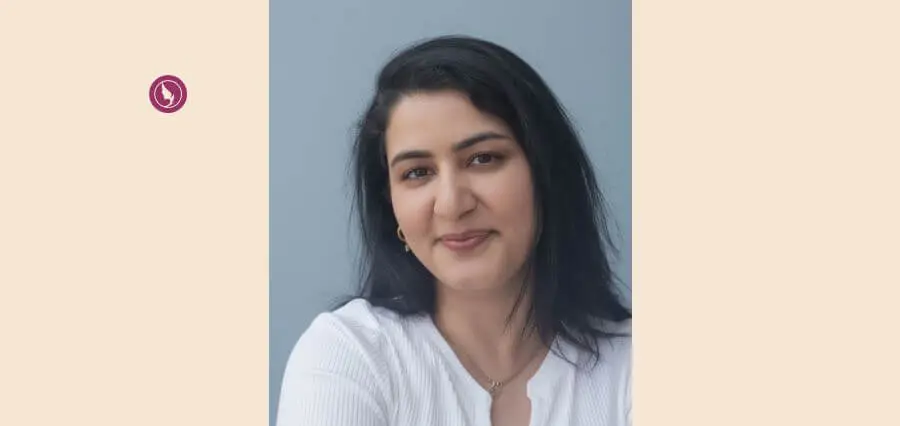
Healthcare can be understood through a patient’s story or the data behind it. However, when these two perspectives come together, they can provide some of the most meaningful insights into the field. For Monika Tickoo, this intersection of patient stories and healthcare data has shaped a career built on curiosity, clinical understanding, and a passion for improving healthcare. The transition from the dental chair to the data warehouse was not a shift away from healthcare, but an extension of her work within the field. Over more than 22 years, she has built a career that brings together clinical experience, research, technology, and healthcare strategy.
Each chapter of her career has strengthened her ability to view healthcare through both clinical and analytical perspectives. Today, as Regional Vice President of Data & Analytics at Prime Healthcare, she applies this perspective to one of healthcare’s most valuable resources: data. Yet, even when working with numbers, metrics, models, and complex datasets, she never loses sight of the person behind each data point. She recognizes that every number represents an individual whose care and experience may be influenced by the insights her work helps generate.
Bridging Clinical Care and Data
Monika’s journey from dentistry to healthcare analytics was shaped by experience in both clinical practice and research. For a period, she practiced as a dentist while also working in clinical research. Her interest in research grew as she saw how data could influence clinical decisions and generate insights that could reach millions of patients.
This realization changed the direction of her career while preserving the value of her clinical training. She continues to view every data point through the lens of the patient and the broader care process.
Curiosity remains central to her work. Each day presents a new healthcare challenge and an opportunity to transform raw data into meaningful information that people can understand, trust, and use to make informed decisions.
Data-Driven Healthcare Impact
Healthcare data has grown from gigabytes to petabytes. For Monika, data volume is not a measure of success. Its true value lies in how quickly organizations can use it to address their most important challenges.
She begins with the problem rather than the technology. Every organization has questions that data can help answer. Her focus is on identifying the questions that matter most. Her teams then develop practical and automated tools that give leaders timely access to meaningful insights.
More reports do not necessarily lead to better decisions. The goal is to help leaders identify problems quickly, understand their underlying causes, and determine where action is needed. Dashboards are valuable when they support this process and make complex information easier to understand. Data creates meaningful value when it leads to better decisions, more efficient workflows, and stronger patient care.
Lessons Across Healthcare
Across different healthcare settings, Monika has observed a common pattern. Many organizations face similar challenges with their data. Information often remains fragmented across systems and teams. Different groups may create separate reports, use inconsistent definitions, or produce multiple versions of the same metric. “Strong data foundations are essential for meaningful healthcare transformation,” she says.
These experiences have reinforced the importance of strong data foundations. Data must be accurate and well structured. Definitions must be consistent, and governance must be clear. Analytics teams must also understand the clinical and business outcomes their work is intended to support.
Organizations can invest in advanced analytics while still struggling to agree on basic metrics. This reflects a foundational issue rather than a technology issue. Without reliable data and consistent definitions, even advanced AI models can produce inaccurate and difficult-to-use results.
Driving Agility Through Data
Few events reveal the strength of a data foundation like a merger. Monika has led through six major mergers and acquisitions and one organizational split over the past decade. She views these events as important tests of an organization’s data capabilities. What may appear to be the addition of another data source often involves much more. Teams must align different technologies, workflows, data definitions, cultures, and assumptions about how information should be used.
These experiences have shaped her approach to flexible and dynamic data architecture. A strong architecture allows new systems to connect quickly and enables teams to validate those connections early. It also helps determine how each system fits into the broader enterprise model without disrupting core operations. Clear governance and close collaboration with clinical and operational stakeholders are essential. Teams must understand what the data represents before integrating it.
A centralized Analytics Center of Excellence provides a strong foundation for this approach. The center establishes common standards, reusable capabilities, consistent definitions, and a shared operating model. At the same time, individual teams retain the flexibility to address their specific needs. This approach helps the organization move faster by reducing duplicate work and avoiding the need to rebuild similar tools. Rapid execution and faster integration have become important strengths of the model.
Turning Insight into Action
Healthcare organizations rarely lack reports. They need information that supports timely decisions. Monika encourages analytics leaders to understand stakeholder workflows before developing reports.
Clear dashboard design helps leaders identify problems quickly and trace them to their root causes. Executives can strengthen strategy, operational teams can allocate resources effectively, and clinical teams can support better patient care.
In one transformation initiative, her team standardized data definitions and streamlined reporting workflows. Leaders could identify bottlenecks, measure the impact of corrective actions, and track performance in real time. The approach also revealed documentation and workflow issues. By connecting strategy, execution, measurement, and improvement, trusted data became a practical tool for driving meaningful change.
Purpose-Driven Leadership
What Monika values most about her work is the opportunity to develop people. Technology changes constantly, but strong leadership and capable teams drive lasting transformation. She encourages analysts, engineers, and data scientists to look beyond technical solutions and understand the clinical and business outcomes behind their work.
She creates an environment where people are encouraged to challenge assumptions, share different perspectives, and bring forward new ideas. She believes the best solutions can come from any level of the organization. Continuous learning is also a key part of her leadership approach, especially in a rapidly evolving healthcare environment.
Her leadership impact is reflected in the growth and confidence of her teams. She does not aim to be the person with every answer. Instead, she builds teams that can think independently, solve complex problems, and turn a shared vision into meaningful results.
Advancing Healthcare Through AI
While setting high standards for her team, Monika also holds herself accountable to those same expectations. She recently completed a postgraduate program in Artificial Intelligence and Machine Learning at Purdue University. The program provided practical experience with modern AI and machine learning frameworks. It also deepened her understanding of both the capabilities and limitations of these technologies.
This knowledge has strengthened her daily work. She can engage more effectively with engineers, evaluate technical architectures, and ask more informed questions about emerging technologies. She sees strong potential for AI in repetitive, administrative, and information-heavy workflows that take time away from clinicians. “Technology should give clinicians more time for judgment, empathy, and patient care,” she says.
By automating these tasks, healthcare professionals can devote more time to clinical judgment, empathy, communication, and patient care. She closely follows AI solutions that reduce friction, help professionals access information faster, identify patterns earlier, and summarize complex medical records.
Balancing AI with Human Expertise
Championing a human-centered approach to AI in healthcare, Monika recognizes that incorrect outputs can have serious consequences. She does not view artificial intelligence and human intelligence as competing forces. Instead, she sees them working together to help healthcare professionals become more informed, capable, and effective.
Human-centered design guides her approach. AI should support human expertise, not replace it. Critical thinking, clinical judgment, and empathy must remain with healthcare professionals. Transparency is equally important. Organizations using third-party AI should understand the data behind a system, its limitations, and how it generates recommendations. Clear explanations help users evaluate AI outputs rather than accept them without question.
Validation and continuous monitoring are also essential. A model that performs well in testing may produce different results with new populations or workflows. Strong governance must define oversight, escalation, and accountability. The goal is clear. AI should handle repetitive tasks so clinicians can spend more time on critical thinking, communication, and direct patient care.
Reimagining Human-Centered Healthcare
Healthcare experienced rapid digital transformation after COVID-19. However, the level of digital maturity and standardization still varies across health systems. Monika does not expect technology to replace human expertise. She believes it should strengthen and extend that expertise.
Her role continues to evolve. Her clinical background, analytics experience, and AI knowledge allow her to connect disciplines that organizations often manage separately. She serves as a collaborative leader who brings together clinical expertise, data, technology, AI, and business leadership. Her goal is to help healthcare organizations make better decisions and improve patient care. She also mentors the next generation of healthcare leaders who can connect technology, clinical practice, and strategy.
Her leadership philosophy rests on three principles. Technology should make healthcare professionals more capable. Data should support better-informed decisions. Human expertise should remain at the center of care. For a dentist who became a data leader, these principles reflect both her professional journey and her vision for the future of healthcare.