
Growing a business has become more challenging than ever. Customers are better informed, purchasing decisions often involve multiple stakeholders and leadership teams are expected to deliver consistent results year after year.
These demands are particularly high in the pharmaceutical and medical device sectors. Clients in these fields are specialists who work under strict regulations and expect their partners to understand both the science and the regulatory requirements. Companies that cannot demonstrate a clear understanding of these areas risk losing their clients’ trust. Sales leaders in these sectors must therefore combine business expertise with a strong technical understanding.
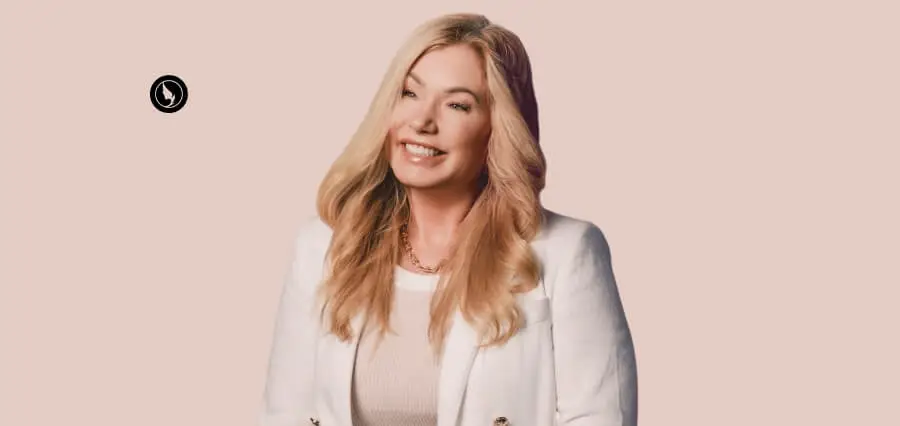
Cheryl Jessen understands this balance well. As Chief Revenue Officer at Celegence, she helps drive growth at a company that supports organizations with their regulatory needs. Her experience across data, software, pharmaceutical and medical device businesses has given her a clear understanding of how large organizations make purchasing decisions.
She has helped companies grow, but she also understands the importance of the people behind that growth. She believes that teamwork, trust and honest communication are key to success. Her experience offers useful lessons for leaders dealing with change.
Let’s explore how Cheryl approaches revenue growth, builds strong teams, and aligns business strategy with customer needs to achieve lasting results at Celegence!
Understanding Revenue Beyond Sales
For Cheryl, revenue is not simply a sales number. It is the clearest signal of whether a company is solving a customer’s problem. “I was drawn to revenue leadership because it sits at the intersection of everything a company does,” she notes.
Early in her career, she learned that the best results came when she stopped trying to have every answer and started asking better questions of customers, product teams, and colleagues. Experiences that did not go as planned also shaped her approach. A launch that missed or a territory model that did not hold up taught her to fail fast, learn quickly, and adapt without losing momentum.
Before changing a go-to-market model, she spends time listening to customers, frontline sellers, customer success, marketing, product, and finance. She wants to understand how revenue actually flows, rather than relying only on how it looks on a slide. She looks for friction points, such as deals that stall at the same stage, handoffs where context gets lost, and talented people working around a process instead of through it. She also considers the perspectives of other leaders, recognizing that a CRO who diagnoses the model alone will miss half the picture.
Turning Growth Opportunities into Results
In a previous role, Cheryl helped triple annual recurring revenue (ARR) in under three years, an achievement she attributes to disciplined focus rather than a single brilliant move. The organization made deliberate choices about the segments it could win and serve exceptionally well, while remaining willing to walk away from business that did not fit.
Close collaboration with product teams helped align roadmap priorities with what the best customers valued most. Consistent sales disciplines around qualification and value-based selling translated those priorities into measurable outcomes. The team also tested ideas quickly. When a segment or message was not resonating, it learned from the experience and redirected resources rather than defending the original plan.
Having led PE-backed and high-growth organizations through strategic transformation and positioned companies for acquisition or IPO, she sees near-term performance and long-term value as partners, not competitors. Boards and investors want predictable growth, but they also expect an organization that can scale without breaking.
She balances these priorities through transparency about trade-offs and early operational discipline, including clean data, repeatable processes, and metrics tied directly to enterprise value. Strategic transformation, she emphasizes, succeeds when the CEO, CFO, and leaders across product, operations, and people functions share one plan and hold one another accountable.
Building Teams Around Strengths
Cheryl designs sales teams around people’s strengths rather than forcing everyone into the same mold. Some sellers excel at opening new markets, while others thrive in deepening complex accounts. When territories and roles reflect those strengths, performance and engagement both rise.
In hiring, she looks for curiosity, coachability, and integrity as much as experience. Incentives should reward the behaviors that create durable customer value, not just closed deals, while performance expectations should remain clear, fair, and regularly reviewed.
“If a structure is not working, I would rather adjust it in a quarter than defend it for a year,” she says.
Her approach to sales execution also places importance on reliable forecasting. Having achieved 200% quota performance and approximately 90% forecast accuracy, she understands the value of solid systems, consistent stage definitions, and metrics such as pipeline coverage, conversion rates, and deal velocity.
However, she believes forecasting is a cultural outcome as much as a technical one. Teams must feel safe sharing the truth early. She wants to hear about a slipping deal in week two, not week twelve. By treating pipeline inspection as coaching rather than judgment and partnering closely with finance and customer success, she works to ensure forecasts reflect the whole customer relationship.
Connecting Expertise with Customer Value
Cheryl’s background spans real-world data, AI for Big Data, SaaS, pharmaceutical and medical device markets, and regulatory and commercial platforms. In these specialized markets, she recognizes that sophisticated buyers want a partner who understands their science, compliance obligations, and business outcomes.
Her approach involves investing in deep domain expertise, pairing sellers with clinical, data, and technical specialists, and grounding every conversation in measurable value. Because enterprise buying cycles involve multiple stakeholders, collaboration is essential. Insights from colleagues in product and analytics can sharpen the strategy by bringing a deeper understanding of the customer’s world.
This collaborative approach also shapes how she builds alignment across marketing, customer success, product, analytics, and sales. Shared customer and revenue outcomes, joint planning, open data, and regular forums allow leaders to challenge one another constructively and work toward common goals. “I firmly believe my role cannot succeed without my peers,” she emphasizes.
For her, “The goal is not for revenue to direct other functions, but for every function to see itself as part of one connected engine.” Their expertise makes the strategy smarter, and their trust makes execution faster.
Developing People Through Trust and Accountability
People development is central to Cheryl’s leadership philosophy. She identifies potential by paying attention to how people learn, not just what they already know. The leaders and sellers who grow fastest are curious, self-aware, and willing to try something new and learn from it.
Her coaching focuses on amplifying each person’s natural strengths while giving honest, specific feedback on what holds them back. She believes accountability and empathy work together, allowing people to meet high standards when they know their leader genuinely cares about their success. She wants a culture where a smart, well-intended miss is treated as a lesson and development reinforces performance.
As a woman leading revenue organizations in technology and life sciences, she has learned that leadership is not about being the loudest voice or the person with every answer. It is about building trust, surrounding yourself with exceptional people, and lifting others as you rise.
Her advice to women aspiring to senior roles is to be bold about raising their hands for stretch roles, treat setbacks as data rather than verdicts, and invest in relationships across the business. She also encourages them to find mentors and sponsors, then become one for someone else.
Preparing for the Future of Revenue
AI, automation, data-driven decision-making, and changing buyer expectations are influencing how revenue teams operate. Cheryl expects AI to reshape how teams prioritize, prepare, and engage, from signal-based account targeting to conversation intelligence and more accurate forecasting.
At the same time, buyers are doing more research independently and expect sellers to add real insight when they engage. Revenue leaders should build strong data foundations, experiment with new tools through small, fast pilots, and scale what works.
Technology, she believes, should free people to focus on the most human parts of selling: building trust, understanding nuance, and solving complex problems together.
Looking ahead, she hopes to continue building revenue organizations that are customer-obsessed, data-informed, and deeply human, where people are known for their strengths and empowered to experiment. She wants clients to see her as a trusted partner, employees to remember a leader who helped them grow, and boards and fellow executives to recognize a collaborator who delivered results the right way.
Ultimately, her vision of innovation goes beyond improving sales processes or adopting new technology. It means continually asking how revenue strategy can create more value for customers, more growth for people, and greater resilience for the business.
For Cheryl, the most meaningful measure of leadership is not only the revenue an organization generates, but also the people it develops and the relationships it builds along the way. As she continues to lead at the intersection of customer value, business growth, and team development, the legacy she hopes to leave is clear: “Ultimately, I want my legacy to be the leaders I helped develop.”