
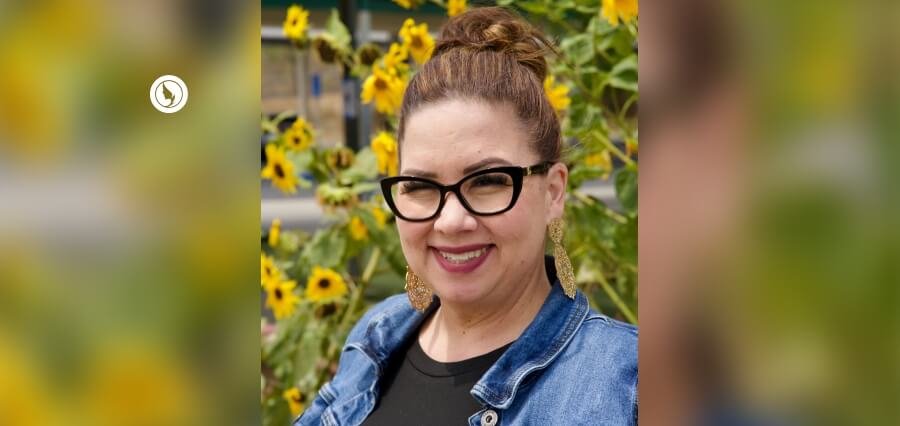
Some people begin their careers with a clear objective in mind; others discover their path through life-altering experiences. Julie Sesser’s path to leadership was shaped by a simple but significant lesson: children who are given the right support have greater chances to succeed. She developed a connection to expanded learning long before she chose to pursue it as a career. As Senior Director of Innovation & Impact, she plays a lead role in statewide leadership development in the implementation of California’s $5 Billion-dollar investment in Expanded Learning.
She and her brother relied on an after-school program from a young age while their mother worked to support the family. These early experiences gave her a lasting appreciation for safe and nurturing environments where children can learn, grow, and thrive. That experience later inspired a meaningful career rooted in purpose. Throughout her career, she has focused on developing leaders and creating opportunities that support students, families, and educators.
The Beginning of a Calling
Julie’s mother raised her children alone, making reliable care outside school hours a necessity rather than a luxury; two adults, Dawn and a woman the children called Ms.G, helped filled that need. They ran a program that provided Julie with a safe and supportive place before school and after the final bell. Their steady presence left a lasting impression on her. That experience showed Julie how expanded learning programs can serve as an equalizer. They can broaden opportunities for children and help them see possibilities beyond the circumstances around them.
This early experience quietly influenced her path. While in college, she took her first job in expanded learning, expecting it to be simply a way to earn money. Instead, she discovered a calling, and what began as a temporary job soon became the foundation of a meaningful career.
Courage in Action
Julie’s career has progressed from site coordinator to regional leader and, ultimately, to her current statewide role. Her journey has not followed a set formula. She credits her growth to experiences that required sound judgment, honesty, and the confidence to act without having every answer.
One experience stands out: while leading a program at a middle school, Julie saw a llama wander onto campus just as students were being dismissed. No training manual could have prepared her for the situation. She remained calm, brought her team together, contacted local animal rescue authorities, and worked with them to safely remove the animal. Although unusual, the incident reinforced the important leadership lesson that staying composed under pressure and knowing when to rely on others can be more valuable than having every answer in advance.
Another turning point came when Julie moved from a regional position into a statewide role. The transition required her to relocate to a city three times the size of her hometown while also rebuilding her personal life. She acknowledges that the move brought real self-doubt, even with years of experience behind her.
The experience taught her that leadership often develops through discomfort. Meeting new people, learning unfamiliar systems, and building programs on a larger scale challenged her to grow beyond what she already knew. Each challenge strengthened her confidence and expanded her perspective as a leader.
Innovating Through Leadership
Innovation is a central part of Julie’s work. This is especially clear in the School of Leadership and Facilitation, a program she helped develop to prepare the next generation of expanded learning leaders.
The program is based on the Stanford Instructional Leadership Corps model, an approach that supported the implementation of Common Core standards across California by having teachers train other teachers. Julie and her team applied the same principle to expanded learning. Former site coordinators now lead cohorts that help current site coordinators and mid-level managers strengthen their facilitation skills across the state.
Participants learn how to lead focused conversations and create meaningful moments for reflection. Those who want to continue developing their skills can enter a second year focused on coaching.
The program has grown significantly since its launch, with ASAPconnect now delivering its eighth cohort of TA Fellows and sixth cohort of TA Coaches in partnership with the California Department of Education. Julie describes this work as an experience that required her to lead in every direction. She coordinated with leaders, colleagues, and teams at different levels to turn an idea into a statewide program.
For Julie, the initiative also demonstrates that innovation is strongest when it is grounded in empathy, equity, and service. These values help ensure that ambitious programs can grow while remaining meaningful and sustainable.
Coaching with Purpose
Julie is a Gallup Certified Strengths Coach and a Certified Professional Coach. Coaching influences many aspects of her leadership approach. She begins with the belief that every person already has the strengths and abilities needed to achieve their goals. Her role is to create a supportive space where people feel seen and valued. She helps them work through challenges and stay focused on what matters most.
She describes her approach as part guide and part mirror. She helps people recognize their strengths, clarify their values, and identify the path that feels right for them. When working with teams, Julie follows a strong code of ethics. She keeps individual coaching conversations confidential. This helps build the trust needed for open and honest teamwork.
She has also found that teams work more effectively when they establish shared expectations early. Clear agreements create a stronger foundation for addressing differences. When conflict is handled in a psychologically safe environment, it can lead to new ideas and stronger collaboration rather than becoming a barrier to progress.
Mentorship for Greater Representation
Julie identifies as Portuguese and is the granddaughter of immigrants. This background has given her a personal understanding of what it means to navigate systems that were not always designed with everyone in mind. It has also strengthened her commitment to creating greater opportunities for others.
This commitment is reflected in the BOLD Youth Program, another collaborative program she helped to launch, and the School of Leadership and Facilitation; both of which include coaching and mentoring. When Julie and the ASAPconnect team were collaboratively designing these programs, she relied on her experience with Sisters Inspiring Change, which is a (currently defunded) statewide leadership program that was pivotal in her own pathway to influence and impact.
Sisters Inspiring Change connected younger women with mentors who have more experience in their careers. Through these relationships, participants gained guidance, perspective, and support as they pursued their professional goals.
Julie’s recognition of how impactful this program was in her own leadership development drives her dream to find a way to relaunch this initiative, and to once again once again bring together developing leaders of color in networks of peer mentoring and support that spans the nation, or even the globe. Her drive to dream big is fueled by the thousands of “sisters” she has encountered over the years who are not only breaking down barriers for themselves, but building the next generation to sustain that momentum.
For Julie, this work is both an honor and a responsibility. It continues the support she received from the women who guided her throughout her own career. She believes representation must lead to meaningful structural change, not simply serve as a symbol. Her commitment is guided by a simple question: if she does not help create these opportunities, who will?
Leading with Balance
Balancing leadership across education, coaching, and community initiatives has required Julie to be intentional about her well-being. She prioritizes regular exercise and daily mindfulness practices to manage stress and maintain focus. However, she acknowledges that taking meaningful time away from work has been the most difficult habit to develop.
Recently, she returned from a trip to Jamaica, which was her first true vacation in a decade. The experience reinforced an important lesson that she now shares with others: rest is not a reward for hard work. It is essential to sustaining it.
By fully disconnecting from email and phone calls, Julie gained a renewed perspective. She was reminded that her life extends beyond her career, even when that career is closely connected to her values and sense of purpose. For her, creating space to rest is an important part of becoming a stronger and more sustainable leader.
Collaborating for the Future
Julie sees the future of expanded learning as one shaped by changing student needs, evolving workforce demands, and advancing technology. She believes ASAPconnect has remained strong because of relationships built on trust rather than transactions. For her, the central challenge is to adapt to a changing world while preserving the human connection that makes expanded learning valuable.
Julie does not view technology as a threat but sees it as a tool that can expand access and create new learning opportunities. ASAPconnect has begun exploring this approach through a blended learning model that combines virtual and in-person experiences. The model connects educators across communities that may not otherwise have opportunities to work together.
Collaboration has also been a consistent part of Julie’s leadership. She makes a clear distinction between coordination and collaboration. Coordination focuses on aligning tasks and logistics. True collaboration requires listening to different perspectives and asking whose voice may be missing from the conversation.
Julie points to ASAPconnect’s partnership with the California AfterSchool Network as an example of meaningful collaboration. The two organizations have set aside institutional competition and adopted a mindset of shared opportunity. They co-train staff, have open discussions about budgets and grants, and include each other in funding opportunities. Julie sees this level of transparency as uncommon and believes it offers a model that other organizations can follow.
Creating a Lasting Legacy
Julie views her legacy not as a monument, but as a pipeline of capable leaders who are ready to take on greater responsibilities when the time comes. She hopes to prepare the next generation of leaders to step into expanded roles, including roles similar to her own.
Her advice to aspiring women leaders begins with self-awareness. She encourages emerging leaders to understand themselves, live their values, and model the well-being they want to see in others. This may include working with a coach or therapist, and making time for genuine rest.
For Julie, being a role model means being authentic. She encourages leaders to ask whether their teams feel seen, respected, and valued. She believes the same care organizations seek to provide to students and families should also extend to the educators who serve them.
When staff feel supported and valued, they are more able to give their best to the people at the heart of the work. Julie believes this sense of care and purpose is what helps sustain a meaningful career in education over the long term.