
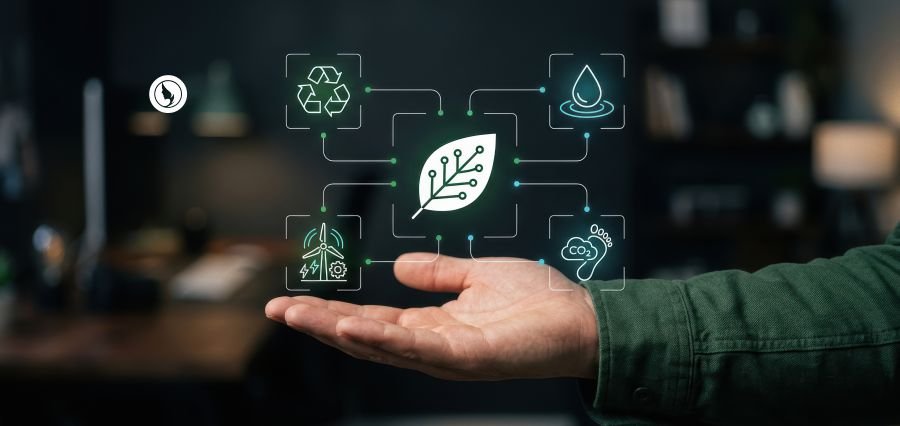
Growth has been measured traditionally through the parameters of sales growth, market share, and market expansion. Even though the above parameters still do matter, companies are now, in practice, defining success more holistically, like how it affects the environment and society, not just financial performance. Customers, investors, and regulators increasingly expect organizations to operate in a responsible manner while also crafting long-term value alongside sustainable financial growth. This shift has spurred businesses to reconsider their models to ensure they are profitable and sustainable, resilient, competitive and contributing to long-term economic and environmental development.
Green Business Transformation is now a strategic method that equips organizations to not only reduce their environmental footprint but also to make them more efficient, resilient, and innovative. Sustainability is no longer regarded as an isolated project but is now a part of business activity. Whether it’s energy management, supply chains or product design, employee engagement, or anything in between, this change is helping companies build sustainable value and adapt to a changing global landscape.
Building Sustainable Operations
Today, sustainable operations are considered a necessity by modern organizations. Environmental sustainability has become a business priority due to the increase in energy prices, climate-related risks and changing regulations. Companies are focusing on sustainable energy, resource efficiency, reduction of waste, and adoption of circular economy approaches in order to improve their performance. In addition to reducing their environmental impact, such practices will lower their cost of operations and improve their resilience, thereby guaranteeing their sustainability, resource security, and competitiveness in different fields.
Through Green Business Transformation, the shift is being facilitated in the sense that the business organization will be required to assess all elements of their value chain. The companies are changing the production processes, discovering sustainable materials, and technologies that will help them to manage the utilization of resources more effectively. They are changing the way they manufacture things, source sustainable materials, and adopt technologies that will help them in utilizing energy and resources efficiently. Organizations can leverage the power of digitization through analytics and artificial intelligence to measure their performance and find ways to improve further.
Innovation and Leadership
Innovation is a critical tool that can drive sustainable growth in a business, as both products and services will be more effective in fulfilling the changing consumer needs and exploiting emerging opportunities. Consumers need to have confidence in brands that are ethical and environmentally responsible. Businesses that have the capability of innovating will not only be able to differentiate themselves but will also boost consumer confidence, build their brands, create strategic alliances, market resilience, and succeed in their businesses.
Leadership also plays a vital role in the transformation process. Leadership that sets sustainability goals will ensure collaboration across departments, thus fostering a green environment culture that includes making responsible decisions as part of their daily work activities. An employee becomes motivated and comes up with innovative ways when they know how the task relates to achieving the sustainability goal of the firm. Green Business Transformation can be achieved effectively where leadership is geared towards the environmental aspect, and sustainability is considered in investment, production, and governance.
Creating Lasting Value
Sustainable growth isn’t just about minimizing emissions or conserving resources. It demands that businesses achieve two things: To value customers, employees, communities and shareholders all at once. Sustainability reporting is becoming the norm; measuring environmental performance and setting science-based targets are becoming more common to show accountability. Clear, transparent communication with stakeholders can help grow trust and backing for a company’s responsible business approach, which leads to stronger investor confidence.
It also boosts corporate credibility, improves connections with stakeholders, and supports long-term organizational resilience in a fiercely competitive global market. Sustainability is the cornerstone on which innovation and resilience are built by organizations, and hence it is an influential power that dictates the future. Green Business Transformation provides organizations the opportunity to meet the requirements of the market, regulations, and consumers, while still remaining profitable.
Conclusion
Business sustainability is not just a future target, but it is a strategic requirement of any organization seeking sustained growth. Organizations that focus on sustainability are likely to benefit from numerous benefits, such as efficiency, resilience, innovation, and establishment of a trust relationship with consumers, investors, and the community at large. It is not only important for the business to align itself with the principles of sustainability, but it will open up the possibilities of innovation, resilience, sustainable value creation, confidence of all stakeholders, and sustainability of the business.
Through continuous innovation, leadership, and social and environmental responsibility, companies can feel comfortable looking into the future and adding value to everyone involved. Growth is no longer defined by just becoming financially successful. Now, growth is defined as building resilience in companies to ensure a sustainable future.