What happens when someone who understands quota pressure, business cycles, and leadership accountability steps into people and culture? The function starts to look less like support and more like a force for performance.
The function moves beyond policy frameworks into a discipline defined by measurable impact. Conversations become more candid, grounded in accountability rather than comfort. Culture evolves from a stated ideal into a tangible, everyday experience—one that is consistently demonstrated, not merely communicated.
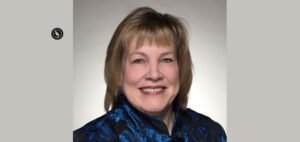
Elizabeth Lages Lages exemplifies this rare intersection of operational insight and human-centered leadership. Over more than two decades at Flexera, she has approached her work with quiet precision and intentionality, shaping an environment where people strategy is inseparable from business success. What she has built is not performative; it is enduring, credible, and deeply felt across the organization.
A Career That Took the Road Less Travelled
Elizabeth Lages, known as El, is the Chief People and Culture Officer at Flexera, a global technology company that helps businesses manage their IT assets, AI spend, software licenses, and hybrid cloud environments. She joined Flexera in 2004 and has spent over two decades growing alongside the company— from her early days in Sales and Operations to her current seat at the senior leadership table.
Her path into people and culture was not the traditional one. Most HR leaders come up through the function itself. Elizabeth Lages came through the front lines of the business. She understands what a quota feels like because she carried one. El knows the pressure of a quarter-end close because she has lived through many. She understands headcount economics, margin, and what it actually takes to win in a market. That background did not pull her away from people’s work. It gave her a sharper lens for it.
Today, Elizabeth Lages applies everything she learned in sales and operations to the way she runs the people function at Flexera. For her, HR is not a support role. It is an operating model—one that should be just as rigorous, just as data-driven, and just as focused on outcomes as any other part of the business.
Running HR Like a High-Performance Business
El brings what she calls a “cloud mindset” to her work. She asks the same questions that Flexera’s customers ask about their IT environments: Is our talent strategy agile and measurable? Can it scale? Are we being honest about what is working and what is not? These are not abstract questions for her. They shape how she makes decisions every single day.
Agility means the talent strategy moves when the business moves. When Flexera went through significant leadership transitions, including a CEO evolution and several major acquisitions, El’s people function was ready to reconfigure, not scramble. She had built it that way on purpose.
Scalability means growing without lowering the bar. El and team have invested consistently in manager enablement, workforce data and tools, performance scorecards, and clear expectations at every level. These are not nice-to-haves in her mind. They are the infrastructure that allows a company to absorb change without losing the culture that makes it worth working at.
Transparency anchors all of it. Flexera runs on six core values: Candor, Passion, Professionalism, Keep Score, Give Back, and Celebrate Success. Of these, Candor is the one El talks about most. She, along with CEO Jim Ryan, built a channel called “Candor Corner” where employees are encouraged to share their thoughts openly. Her team runs regular engagement surveys that get actioned in teams across the organization. When the company makes a decision, leaders explain the why, the trade-offs, and the expected impact. El holds her managers to the same standard. No vague messaging. No ambiguity dressed up as strategy.
Letting AI Assist People to Do More Human Work
El is not afraid of artificial intelligence. She welcomes it on her own terms. She sees AI as a tool that frees people to focus on the work that actually requires a human: judgment, creativity, genuine relationships, and the kind of nuanced thinking that no algorithm can replace.
At Flexera, every employee has access to a Microsoft Copilot and Frontier license The organization trains staff on how to use it well, not just how to use it. El’s People team is deploying AI-powered HR agents so employees can get quick answers to day-to-day questions and get back to work without waiting. She has also built out a shared services team, is implementing an HR help desk ticketing system, and implementing automation for key HR workflows. This frees her team to focus on what matters most—retention strategy, performance decisions, leadership development, and the big-picture questions that move the business forward.
The way she sees it, AI does not shrink the people function. When used well, it makes people function more powerful.
Building an Organization Around Skills, Not Just Titles
El’s thinking on skill-based talent management grew directly out of Flexera’s experience with mergers and acquisitions. When two companies come together, the real question is not just who is here. It is what they can do, what the combined business needs, and where do those two things overlap?
“Static job descriptions cannot keep up with a business that is always evolving. But skill-based approaches only work when they are paired with clear accountability. Capability mapping tells you what talent you have and what is missing. Role clarity defines who owns what. You need both. One without the other creates confusion.”
El put this thinking to work during Flexera’s performance management transformation. As the company strengthened its performance and placed greater emphasis on recognizing meaningful contributions, she made sure that capability expectations and performance expectations were aligned. Managers, El says, were the priority. Before anything else could shift, they needed to be enabled and fully on board.
Catching Problems Before They Become Crises
One of the things Elizabeth Lages says she has learned over the years is that most organizational problems do not happen suddenly. They build slowly, quietly, while everyone is looking elsewhere. By the time the issue is obvious, the opportunity to fix it early has already passed.
At Flexera, she runs a year-long listening strategy that tracks sentiment, workload distribution, development momentum, and manager effectiveness. It is not a retrospective tool. It is an early warning system. Internal AI and predictive analytics flag potential retention risks before employees start resigning. HR business partners then work directly with leaders to diagnose what is happening and course-correct before things get worse.
When data shows that a team is stretched too thin, that engagement is quietly slipping, or that a high-potential attrition is ticking up, El’s team steps in. They do not wait to be asked. They do not wait for the exit interview.
Treating Culture Like a Living Product
Elizabeth Lages does not treat HR policies as documents that get written once and reviewed annually. She treats them like software. They should be tested, updated, and improved based on real feedback from real people, in continuous cycles, not once-a-year overhauls.
As part of Flexera’s ongoing listening strategy, she combines regular engagement surveys with short pulse surveys, along with gathering feedback on external platforms like Glassdoor. Feedback from employee groups, manager forums, and open channels like Candor Corner all flow into a real-time picture of where the culture is healthy and where it is not. Rather than making sweeping changes all at once, El’s team rolls out incremental updates, watches how employees respond, and iterates quickly. The question driving all of it: what is creating the most friction, and what small change could clear it?
She has found, time and again, that the smallest adjustments sometimes produce the biggest results.
Looking Ahead to 2030: A Workforce Built to Adapt
When Elizabeth Lages talks about the future of work, she is not interested in predicting which jobs will exist in five years. She is interested in building a workforce that can answer that question for itself: one that is confident enough, skilled enough, and adaptable enough to move with the business no matter what comes next.
At Flexera, learning is moving away from scheduled training events and toward something more natural: learning that happens inside real work. Stretch assignments, live problem solving, and project-based skill building. Employees grow by working on the challenges that are actually in front of the business. Managers are learning catalysts in this model, not just performance evaluators. They have career conversations at least quarterly. They help employees identify the skills adjacent to what they already know and create a safe space to test those skills inside the business.
El is also clear about something her performance management transformation taught her: learning culture and performance culture must grow together. She opines, “Raise the bar without investing in development, and all you create is pressure. Invest in development without raising the bar, and all you create is activity. The combination, high expectations paired with real support, is what produces genuine growth.”
Her vision for 2030 is not a single academy or a defined curriculum. It is a workforce that never stops learning, never stops adapting, and never waits for the world to change before it starts preparing. At Flexera, that is the habit Elizabeth Lages is building right now.
What She Tells Every Young Woman Who Wants to Lead
When Elizabeth Lages talks to emerging women in HR, her message is direct. If you want a seat at the table where the real decisions get made, you need to speak the language of the business, not just the language of people.
That means understanding the P&L, how margin works, how headcount economics tie to outcomes, how to operate in a PE-backed company, and how the company goes to market. The strongest HR leaders she knows do not wait for the business to come around to their ideas. They define the problem in business terms, quantify the cost, and show exactly how the people strategy closes the gap. That is how credibility is built. And credibility is the only currency that gives you real influence.
HR is no longer a background function. It is one of the most consequential forces shaping how companies compete. But claiming that role requires more than passion for people. It requires business fluency. “Pair the two,” she says, “and there is no limit to what you can build.”