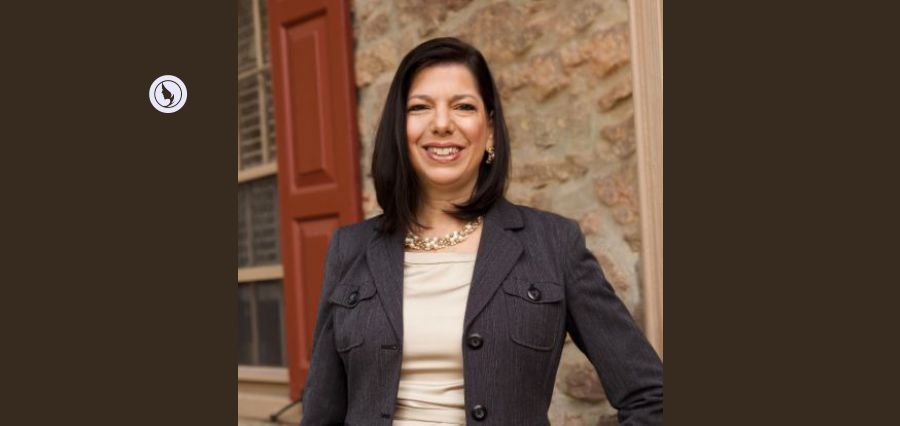
Long before she mastered markets and models, Heidi Hirsh RICP®, ChSNC® recognized that financial planning was, at its core, a matter of ethics. Her career began within the regulatory heart of the industry, serving as a Compliance Examiner for the U.S. Securities and Exchange Commission (SEC). Witnessing firsthand the devastating consequences of unaccountable advice, she developed a vigilant professional philosophy that remains her North Star today.
This foundational experience profoundly shaped her approach at Anthony Petsis & Associates, Inc. For over thirty years, Heidi Hirsh has walked alongside families through their most pivotal life transitions: navigating the complexities of disability care, entering the “retirement red zone,” and the delicate process of estate planning. She operates on the conviction that every engagement must transcend the spreadsheet to honor the real lives and emotions behind the numbers.
By marrying strict fiduciary discipline with deep compassion,Heidi Hirsh has built a practice rooted in trust. Her mission is to help families architect financial strategies that are not only resilient against market volatility but are built to endure for generations.
Blueprint Before Brick: A Purpose-Driven Approach to Special Needs Planning
Heidi Hirsh’s methodology fundamentally reimagines the advisor’s role for families navigating complex, lifelong challenges. For those managing disabilities, traditional “accumulation-to-retirement” timelines are often irrelevant. These families operate on a horizon of continuous stewardship, requiring financial structures that remain resilient long after the primary caregivers have passed away.
“We empower families to move from passive clients to the lead architects of their own long-term security,” Heidi Hirsh explains. Her process pointedly avoids starting with balance sheets. Instead, she begins by defining a “Quality-of-Life Vision”—a 40-year blueprint that centers on the specific needs and dignity of the individual with the disability.
In this framework, investments are viewed simply as “materials”—secondary tools selected only after the “house” has been designed. This specialized strategy integrates essential government benefits, such as Supplemental Security Income (SSI) and Medicaid, with private assets. By utilizing sophisticated vehicles like Special Needs Trusts (SNTs) and ABLE accounts, Heidi Hirsh ensures that a family’s private wealth enhances their lifestyle without jeopardizing their eligibility for public support—a level of nuance often missing from conventional financial plans.
“When we treat families as architects, the relationship shifts from transactional to transformational. We aren’t just managing a portfolio; we are ensuring the structural integrity of human life,” she notes
Navigating the Retirement Red Zone
Heidi Hirsh brings specialized expertise to what she defines as the “Retirement Red Zone”—the critical years immediately surrounding a client’s final day of work. This transition from wealth accumulation to decumulation is the most significant pivot in a person’s financial life, yet it is where many traditional plans are most vulnerable.
While market volatility can actually benefit younger investors through dollar-cost averaging, it becomes a primary threat during the withdrawal phase. Here, Sequence of Returns Risk looms large: a market downturn in the early years of retirement, combined with regular distributions, can fundamentally break the mathematics of portfolio longevity.
“Withdrawing from an asset that is losing value creates a ‘double hit’—you are liquidating more shares at lower prices. This can deplete a portfolio faster than it can ever recover, potentially jeopardizing decades of savings,” she explains
To mitigate this, Heidi Hirsh moves beyond generic asset allocation toward time-segmented income planning. At the core of her strategy is a meticulously constructed bond ladder—a series of high-quality, fixed-income instruments maturing in successive years. This structure ensures that income for the first six to eight years of retirement is “banked” and insulated from equity market fluctuations.
Crucially, Heidi Hirsh advocates for a tactical “glide path” that begins years before the retirement date. The goal is not a “best-guess” spending level, but an architected, tax-efficient income stream designed to provide a steady “paycheck” regardless of market conditions.
The Personal Touch Meets Modern Technology
Anthony Petsis & Associates operates from a 200-year-old historic building where callers reach human beings rather than complicated phone systems. Clients who walk through the doors receive treatment as family members. Yet Heidi Hirsh recognizes the firm cannot ignore advancing AI technology.
The firm has added AI capabilities to its website and uses technology for more comprehensive meeting notes. However, she maintains firm boundaries, emphasizing that nothing can take the place of human interaction and empathy. She believes technology will never replace the heart of a relationship; the genuine connection built with each client as they share their personal and financial experiences together.
Empowering the Great Wealth Transfer
Heidi Hirsh positions herself strategically at the intersection of two powerful trends: the Great Wealth Transfer and the rise of women as primary financial decision-makers. An estimated $30 trillion will pass into women’s hands by the end of this decade, fundamentally reshaping who controls inherited capital.
As a female leader, she views her perspective not as a disadvantage but as a key to unlocking the firm’s future. She ensures both spouses attend initial planning meetings, departing from traditional models where men dominated financial conversations. Today’s reality shows women increasingly generate higher family incomes and frequently serve as sole breadwinners. Daughters and granddaughters’ step into personal and financial caregiver roles for aging parents.
“Whereas men typically focus on the numbers, women tend to look at assets through the lens of financial security. Therefore, you must approach women far differently than you approach men when it comes to money,” she observes.
She addresses what psychologists call “Bag Lady Syndrome”, the deep-seated fear that regardless of current success, one crisis could eliminate financial independence. While many advisors attempt solving this anxiety with spreadsheets, she knows math alone doesn’t cure fear. Women want to be heard, not just managed.
“We don’t just provide a Return on Investment; we provide a Return on Life by building the structural and emotional fortresses that turn fear into confidence,” she states.
A Fiduciary Foundation Rooted in History
Heidi Hirsh’s commitment to client advocacy was forged thirty years ago, as a Compliance Examiner at the Securities & Exchange Commission, where she witnessed firsthand the consequences when client interests don’t come first. For her, the Fiduciary Standard represents not marketing tactics but the only logical way to conduct business.
Anthony Petsis & Associates takes this legal standard further with what she calls the “Family Standard.” The firm doesn’t merely ask whether investments serve clients’ best interests they ask whether they would recommend the same strategies to their own mothers, brothers, or children. Many strategies implemented for clients mirror those in the advisors’ personal financial plans.
The firm offers three distinct compensation structures, ensuring accessibility regardless of asset levels. She emphasizes that clients are not treated as numbers or target asset levels, but as valued members of the firm’s family.
Managing Emotions, Not Just Wealth
Heidi Hirsh recognizes that financial planning splits into 10% math and 90% behavior. She serves as a Behavioral Coach, helping clients navigate fear, greed, and uncertainty. Through Monte Carlo simulations running thousands of “what-if” scenarios, she provides emotional insurance by “pre-living” bad years through simulation.
She concludes that their goal is not merely to manage wealth, but to thoughtfully address the emotions that wealth can create ensuring that a client’s strategic vision remains intact for their children and grandchildren, regardless of what the headlines say.
For young women considering finance careers, she offers direct advice: “Hurry up. Industry is waiting for you. We need architects of empathy who understand that a portfolio is a tool for security, impact, and legacy.”