Designing capability shifts across people, operating models, and technology.
We are living through a transition larger than digitalization. The Intelligence Era is becoming the electricity of our time. Just as electricity once reshaped every industry without belonging to any single one, intelligent and advanced technologies are now transforming how organizations decide, operate, and compete.
Intelligence today extends beyond algorithms. It lives in robotics, quantum co-processing, photonics, spatial computing, digital twins, bio-engineered materials, and the convergence of information technology with operational technology. Innovation increasingly exists not only in software but also in atoms, cells, and light.
The question for leaders is therefore no longer which technology to implement, but how to redesign organizations when technology becomes embedded in every layer of reality.
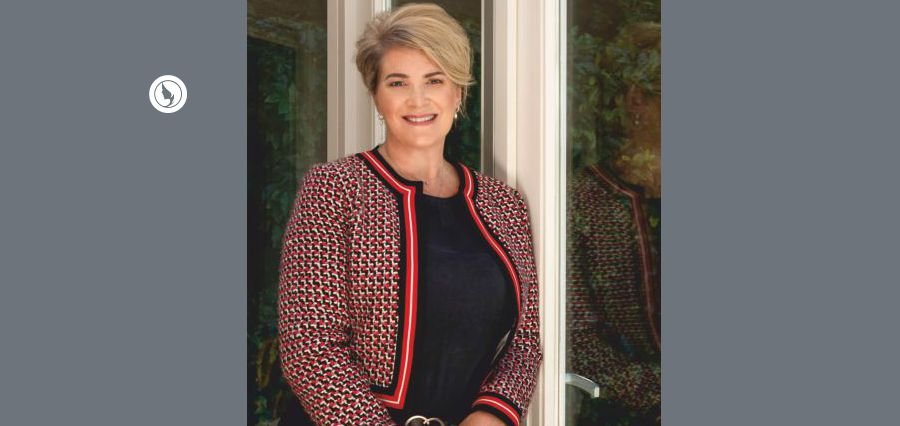
At Capgemini, Dr. Cara Antoine operates at that intersection.
As Executive Vice President and Chief Technology, Innovation, and Portfolio Officer, she leads capability shifts across 34,000 employees spanning Northern and Central Europe and India, across industries including energy, life sciences, automotive, retail, and the public sector.
Often described as a luminary in human-centered transformation, she approaches transformation as a redesign of organizational behavior. In her view, this era will be defined less by the sophistication of technologies than by the maturity of organizations adopting them.
From Technology Possibilities to Organizational Capabilities
Dr. Antoine treats technology, innovation, and portfolio management as a unified operating model. Technology expands possibility, innovation determines direction, and portfolio enforces discipline.
She begins with business intent. Before selecting solutions, she defines the outcomes organizations want to create for customers, employees, and society over a multi-year horizon. Capabilities are then designed to enable those outcomes, and technologies are selected last.
This reframes executive decision-making. Leaders shift from asking which tools to deploy toward defining how work itself should function. Technology becomes an enabler rather than the driver.
To embed this at scale, she introduced a portfolio governance model centered on strategic “big bets.” Thousands of disconnected offers were narrowed into focused priorities. Teams across disciplines began operating horizontally rather than in silos.
Adoption of these priority offers reached 94 percent across the business. By combining capabilities into “power combinations,” organizations saw larger deal sizes, faster progression through the sales cycle, and longer engagements as clients recognized broader transformation opportunities.
Integration converted complexity into direction and direction into momentum.
Disciplined Innovation and Market Relevance
Innovation often fails because organizations either explore endlessly or control excessively. Dr. Antoine established a model of disciplined discovery.
Each initiative defines the problem, the hypothesis, and the value to unlock. Transparent pipelines track movement from exploration to validation to embedding so evidence guides progress.
When initiatives struggle, leaders surface assumptions and redefine next steps. Retrospectives focus on improving systems instead of assigning blame, which strengthens trust and accelerates recovery.
The same philosophy reshaped client collaboration. Upskilling client innovation leaders resulted in participating teams ranking in the top twenty percent of satisfaction improvement, while non-participating teams ranked in the bottom twenty percent.
Innovation became a repeatable capability rather than an occasional success.
Clarity, Focus, and Energy: Leading People Through Change
Transformation succeeds when people understand direction and feel confident acting within it. Dr. Antoine frames leadership around three connected elements: clarity, focus, and energy.
- Clarity defines what changes and what remains stable so uncertainty does not become paralysis.
- Focus directs effort toward the few priorities that create the greatest impact.
- Energy follows naturally once people see meaningful outcomes from their work.
This philosophy reshaped collaboration across teams. Stakeholders debate ideas openly before commitment and execute collectively afterward. Cross-functional work increased because individuals understood shared goals and could connect their contributions to larger outcomes.
Her leadership style combines calm direction with intellectual humility. As complexity rises, certainty declines. Stability comes from consistent principles rather than rigid plans. Resilience emerges when organizations treat setbacks as information and adapt accordingly.
Technology as Decision Augmentation
Advanced analytics and AI helped teams move from reactive engagement to proactive value creation. By analyzing signals across markets, organizations understood need, intent, and fit.
Need identified client challenges.
Intent revealed urgency.
Fit aligned capabilities to timing and context.
These insights guided conversations and enabled teams to shape opportunities rather than wait for requests. Workflows evolved and roles shifted toward interpreting insights instead of collecting information. Teams also discovered overlooked value areas during transformations.
Technology therefore augmented decision-making rather than replacing it.
A Broader Vision for Human-Centered Transformation
Dr. Antoine’s ambition extends beyond deploying advanced technologies toward building organizations capable of evolving continuously. This requires individuals to adopt a growth mindset, approaching change as learn-it-alls who stay curious, open, and willing to integrate new insight.
She emphasizes that transformation initiatives rarely fail because technology does not work. They fail because leadership does not adapt and act. Governance, ethics, and empathy determine whether innovation scales responsibly.
Organizations must redesign decision rights, workflows, and accountability alongside systems. Curiosity becomes more valuable than certainty, and collaboration outweighs hierarchy. Leadership shifts from directing tasks to designing environments where people and intelligent systems work productively together.
Many organizations treat advanced technologies as implementation challenges. Dr. Antoine views them as operating model shifts. The real risk is not automation replacing people, but organizations failing to redesign decision-making around human-machine collaboration. Competitive advantage will belong to those that improve human judgment faster than they automate work.
The Integrated Trinity: A Framework for Strategic Coherence
Dr. Cara Antoine views technology, innovation, and portfolio management not as separate capabilities but as complementary lenses examining the same fundamental question of organizational relevance. Her leadership is built on the premise that these three pillars must function as a unified ecosystem to drive genuine progress.
- Technology provides the realm of possibility, offering the tools and infrastructure necessary for change.
- Innovation provides the essential direction, ensuring that creative energy is channeled toward purposeful goals.
- Portfolio provides the necessary discipline, governing the allocation of resources and managing organizational risk.
She argues that without this integration, organizations are destined to fail in one of two ways: they either chase fleeting trends without substance or defensively protect legacy systems that no longer serve their purpose. With integration, however, they move deliberately toward sustainable futures.
This integrated perspective shapes Dr. Cara’s leadership from the ground up. She begins every strategic journey not with the latest technological gadgets, but with business intent. By asking what outcomes should exist for customers, employees, and society in a three-to-five-year horizon, she anchors high-level ambition in real-world impact. Only after defining these desired futures does she translate ambition into capabilities and then into specific solutions. This rigorous process prevents the “technology-led strategy” trap, where organizations adopt expensive solutions before they truly understand the problems they are trying to solve.
Cultivating a Culture of Disciplined Discovery
Dr. Cara Antoine rejects the false dichotomy between innovation as uncontrolled creativity and innovation as a bureaucratic process. Instead, she fosters a culture where “freedom of thought” is inextricably linked to “clarity of responsibility”. In her framework, experimentation is encouraged, but it requires a clear articulation of intent.
Every idea presented within her organization must define three critical components: the specific problem it addresses, the hypothesis it intends to test, and the potential value it could unlock. This rigor transforms innovation from unstructured brainstorming into disciplined discovery. Accountability in this environment emerges through visibility. Transparent pipelines show how ideas move through stages from exploration to validation to scaling. This systemic approach removes internal politics and replaces subjective opinion with systematic, evidence-based learning.
When overseeing portfolios that carry significant organizational risk, Dr. Cara Antoine practices what she terms as visible ownership. She believes that when initiatives struggle, leaders must step forward first, not last. She communicates transparently about assumptions, changed circumstances, and revised approaches. This transparency creates a culture where teams feel safe to surface issues early, which ultimately shortens recovery time and deepens organizational trust. Dr. Cara Antoine conducts structured retrospectives focused on insight rather than justification, shifting the focus from individual blame to collective improvement opportunities.
Empowering the Human Element: Fluency, Agency, and Belonging
As technology leadership increasingly intersects with people’s leadership,Dr. Cara Antoine recognizes that a future-ready workforce depends less on narrow specialization and more on the capability to operate across disciplines. She focuses development efforts on three interconnected dimensions:
- Fluency: Enabling a shared language and collaboration between technology and business functions.
- Agency: Empowering people to act entrepreneurially by providing clear outcomes combined with the autonomy to achieve them.
- Belonging: Ensuring individuals feel genuinely valued through intentional leadership behaviors, including active listening, meaningful recognition, and deliberately diverse team compositions.
Dr. Cara Antoine understands that clarity drives motivation more powerfully than compensation. People rarely resist effort; they resist an unclear purpose. By connecting today’s technical releases to tomorrow’s organizational relevance, she transforms abstract strategy into personal meaning for every team member.
The Philosophy of Intentional Leadership
Executive leadership presence sets the organizational tone, whether it is deliberately cultivated or unconsciously transmitted. Dr. Cara Antoine demonstrates a presence defined by intentional curiosity, calm decision-making, and intellectual humility. She leads as a continuous learner rather than a bearer of absolute knowledge, recognizing that in disruptive environments, certainty is often a dangerous illusion.
In her view, leaders must project confidence in the overall direction while maintaining radical openness in the methodology used to get there. The most critical leadership traits during disruption are clarity, empathy, and consistency. Empathy makes ensuring individuals feel supported during adaptation, clarity gives the required orientation, and consistency fosters the dependability teams need to know that core ideas hold true even if particular tactics change.
This philosophy was shaped through navigating continuous transitions across industry shifts and organizational transformations. Early in her career, Dr. Cara Antoine learned that specific technical expertise can quickly become obsolete, while the capacity to learn remains durably valuable. This instilled a deep humility toward knowledge and a commitment to growth mindsets. She views resilience not as mere endurance, but as the ability to reinterpret setbacks as vital information for the next attempt.
Collaboration and Collective Advancement
Innovation at the enterprise level requires seamless collaboration across organizational functions. Dr. Cara Antoine fosters alignment among diverse stakeholders through clear decision frameworks. Within her teams, stakeholders understand exactly which decisions require consensus, which need consultation, and which demand leadership determination.
She actively encourages vigorous debate before a commitment is made, often asking team members to argue counter-positions to stress-test an idea. However, once a decision is finalized, the organization must move as one unified entity, regardless of the differing opinions held during deliberation. Trust emerges when people know their voices truly influence direction, and that, once established, everyone advances collectively.
A Vision for Human-Centered Transformation
Looking forward,Dr. Cara Antoine recognizes that while technological achievements will continue to evolve, it is the cultural shifts that endure. Her aspiration is to leave an organization where innovation represents a sustained habit, and leadership is defined by enabling others to succeed. She aims to establish three lasting elements:
- A shared language bridging business strategy and technology implementation.
- A workforce that is both confident and energized by continuous learning.
- Decision-making grounded in responsible value creation with sustained societal impact.
Beyond her immediate responsibilities at Capgemini, Dr. Cara Antoine brings a unique perspective to what she identifies as the defining transformation of our era. While many describe this moment as an “AI transformation,” she argues it represents something far more profound: human transformation accelerated by intelligent technology.
Artificial intelligence reshapes how humans decide, create, and collaborate, but the critical challenge remains behavioral adaptation. Organizations must grapple with how people trust algorithmic recommendations, how to define accountability in human-machine collaborations, and how to preserve independent judgment while augmenting it with computational intelligence. This requires investing equally in mindset evolution and infrastructure development.
In this new era, curiosity is rewarded over certainty, and collaboration is valued over hierarchy. Leadership shifts from the simple direction of work to the design of environments where humans and machines complement each other’s distinctive capabilities. Dr. Cara Antoine exemplifies this new generation of technology leadership, integrating strategic vision with operational excellence and centering human potential within every technological leap. Her work demonstrates how organizations can navigate complexity without losing coherence, pursue transformation without sacrificing stability, and deploy advanced technologies while deepening the very human capabilities that give them meaning.