Primary care offices run on a quiet tension that most patients never see. The physician walks in, sits down, and almost immediately turns toward a screen. For a few minutes, maybe more, the computer is effectively the center of the room — the thing being served — while the patient waits. In a standard fee-for-service practice, that dynamic is inconvenient. In a model where the physician-patient relationship is genuinely core to how care gets delivered, it is a problem worth building your way out of.
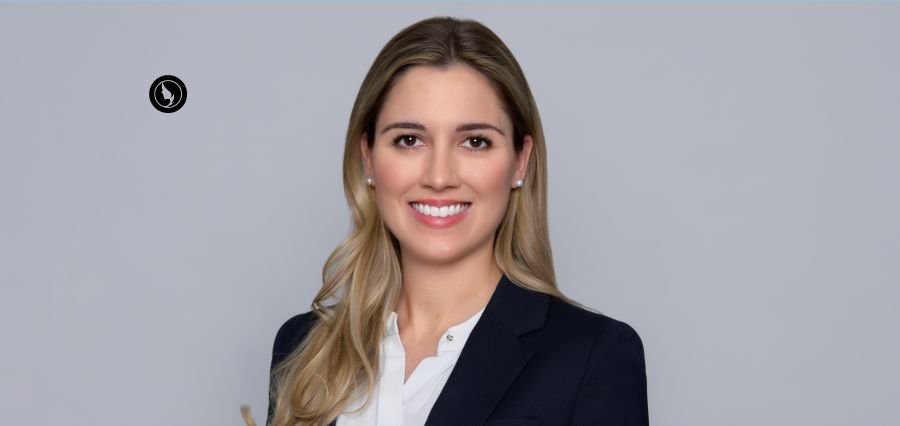
That is the premise behind CareSuite, the clinical platform Nastasja Robaina and her team at ChenMed have spent the last several years building from scratch. As the Managing Director of Product, PMO, and User Experience at ChenMed, she and her team build tools designed for the real world of medicine. Their platform, CareSuite, is already active in over 100 centers across 15 states. The question her team keeps returning to is not “what can we build?” but rather “what does the physician actually need in that room, and when does she need it?”
The Problem That Became the Mission
The decision to build a proprietary EHR rather than adopt an existing platform was not made lightly. Every major electronic health record on the market was designed for fee-for-service medicine — systems built to document encounters, generate billing codes, and satisfy compliance requirements. ChenMed’s model inverts almost all of those incentives.
ChenMed operates on a value-based care model, which means the company is financially aligned with keeping patients healthy rather than maximizing procedure volume. Its clinics serve low-to-moderate income seniors, many managing multiple chronic conditions simultaneously – a population that has historically been underserved and that requires a fundamentally different kind of clinical attention. Physicians carry smaller patient panels, spend more time with each person, and take genuine long-term accountability for outcomes.
No existing EHR was built for that. Adapting one would have meant fighting the system’s assumptions at every turn. So the team made a different call: build something purpose-built for proactive, relationship-based care, and design it around how the work actually happens rather than how legacy billing logic assumes it does.
“The friction we kept running into was a physician toggling between disconnected screens trying to assemble a complete picture of a patient. The system wasn’t helping her think — it was slowing her down. For our population, that delay isn’t just inefficient. It’s a clinical risk.” — Nastasja Robaina
Designing for the Doctor in the Room
The team operates by one principle: if a physician has to go looking for information during a visit, the system has already failed. CareSuite is built to do the anticipatory work before a patient arrives: pulling recent labs, flagging any changes in risk status, and organizing the visit agenda so that by the time the doctor walks in, the most important things are already on the screen, organized, prioritized, and ready.
Getting that right required the product team to spend real time inside ChenMed’s clinics. Not in conference rooms reviewing specs, but watching actual visits — seeing where a physician’s attention breaks, where she has to pause and search, and what it feels like to manage clinical complexity under time pressure. That embedded observation shapes what the team builds and, just as importantly, what not to build.
CareSuite’s risk model currently processes more than sixty variables to identify patients at elevated risk of hospitalization within thirty days. But Nastasja Robaina’s team is deliberate about how those predictions are surfaced. Every alert has to meet three criteria before it reaches a physician: it must be specific to that patient, it must arrive at a moment when the physician can act on it, and it must come with a recommended next step already attached — a care coordination task, an order suggestion, or a patient outreach prompt. Alerts that physicians consistently dismiss get flagged for review, because in Nastasja Robaina’s framework, a dismissed alert isn’t a physician problem. It’s a design problem.
The Algorithm Advises. The Doctor Decides.
One of the core principles behind CareSuite is what Nastasja Robaina’s team calls algorithmic humility — the recognition that a predictive model, however well-built, is not a clinician. It processes variables. It cannot pick up on a shift in mood, factor in what the patient mentioned about their home situation last week, or weigh the judgment call a physician makes after years of knowing someone.
In practice, this means CareSuite is built to inform, not to command. Risk scores appear as clinical context, not conclusions. The physician can review what the model flagged, weigh it against what she knows about her patient, choose a different path – with her reasoning documented. When doctors consistently deprioritize a model’s recommendations, CareSuite captures that pattern and surfaces it for review. The tool learns from clinical judgement as much as the other way around. Every alert also explains itself; it shows the physician not just what was flagged, but why, so the physician can assess it rather than just react to it.
This is deliberate. At ChenMed, the physician is the decision-maker. The technology’s job is to make that decision-making easier and better-informed, not to replace it.
The Excitement around Ambient AI
One of the more nuanced conversations in clinical technology right now is around ambient AI — voice-driven tools that listen to a patient encounter and generate clinical documentation automatically, keeping the physician’s attention on the patient rather than the keyboard.
It’s an appealing idea, and one Nastasja Robaina’s team has examined carefully. But at ChenMed, the calculus is more complicated than it first appears. In a fee-for-service environment, where reimbursement is tied to documentation detail, physicians often spend two or more hours a day writing notes. Ambient AI solves a real problem there. ChenMed’s model works differently: physicians are actively trained to write concise, clinically focused notes — an assessment, a plan, key observations — rather than lengthy narratives. The documentation burden is already being addressed culturally, which changes where AI investment is most likely to generate impact.
Where Nastasja Robaina sees the more significant near-term opportunity is in real-time clinical decision support: proactive signals during the visit that surface a care gap, a drug interaction flag, or a risk indicator at exactly the moment when the physician can respond to it. Technology that is present but unobtrusive, and that makes the physician more effective without adding cognitive load. That is the direction her team is actively building toward.
Credentials, Conviction, and What Comes Next
Nastasja Robaina holds a Bachelor and Master of Engineering in Biomedical Engineering from the University of Miami. She loves to stay relevant in her field with executive programs at Harvard Business School Online and Stanford University Graduate School of Business. She joined ChenMed in 2020 to lead Product Management and is currently the Managing Director of Product Management, PMO, and User Experience.
Robaina’s longer-term direction for CareSuite is toward a care environment where the screen becomes less central to the visit. The goal is not screenless technology for its own sake — it’s technology that earns its presence by genuinely serving the encounter rather than competing with it. Every design decision her team makes is evaluated against that standard.
Her background in biomedical engineering, her time in medical devices at Stryker, and her product work at the intersection of augmented reality and healthcare at Magic Leap all inform how she approaches that question. The technology in a care setting is only justified if it improves what happens between the physician and the patient. Everything else is overhead.