
A child’s brain has already completed the most significant task of its life before she ever holds a pencil, writes her name, or enters a school. Neural connections develop during the first five years of life at a rate that will never be surpassed. Despite this powerful potential, over a million 3-5 year old children in South Africa are not receiving any kind of structured early education during this time.
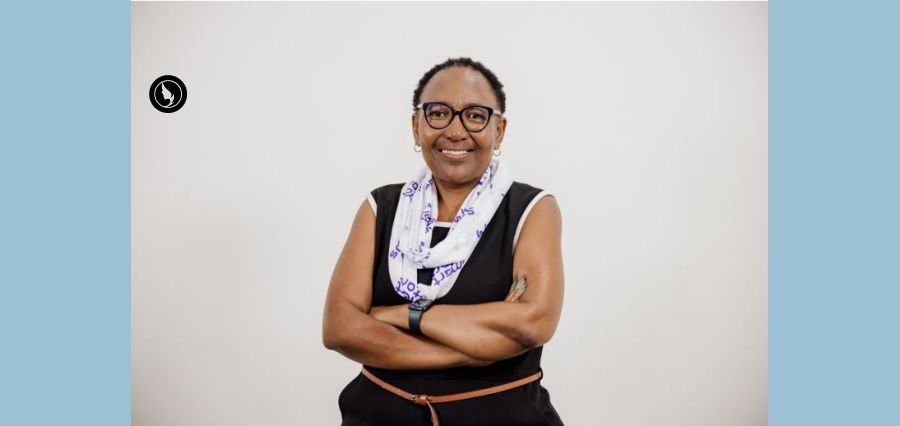
Most leaders who understand this fact write a report about it. Grace Matlhape built a national delivery system. As the Chief Executive Officer of SmartStart, she has spent years turning an uncomfortable truth about early childhood development into a functioning, scalable model that currently reaches over 160,000 children each week, through more than 15,000 women practitioners running programmes in the very communities where those children live. What makes her work remarkable is not just the size of it. It is the logic behind it: that the women closest to the problem are also the most powerful part of the solution.
A Network Rooted in Community
Grace’s choice was deliberate. She did not set out to replicate the traditional school model. She set out to make early learning accessible to children in the poorest 60 percent of South Africa’s population- in rural areas, peri-urban settlements, and informal communities where formal infrastructure simply does not exist. So she and her team designed SmartStart around what was already there: homes, community halls, neighbourhood spaces, and women who knew their communities inside out.
Practitioners transform these everyday spaces into stimulating learning environments for children aged three to five. The focus is not on buildings or equipment. It is on the quality of the relationship between practitioner and child, and on giving each practitioner the support she needs to make that relationship count.
The Art of Doing More With Less
Grace and her team built SmartStart on a principle she calls lean innovation. When the model was developed, they faced two uncomfortable truths at once: the traditional way of delivering early childhood education was far too expensive to scale across South Africa, and the problem was far too urgent to wait for a more affordable solution to appear.
So she looked at the cost drivers and cut them. Instead of building new schools, she empowered women to use spaces that already existed. Instead of centralising delivery, SmartStart, under Grace’s leadership, created a network of implementing partners who work directly on the ground. Instead of developing content that required expensive rollout, they built digital tools and modular materials that practitioners could access and adapt within their own community context.
The outcomes tell their own story. Sixty-five percent of children in SmartStart programmes are developing as expected for their age. Among the most vulnerable children, those who enter the programme already falling well behind, the proportion drops from 26 percent to 14 percent in less than a year of learning. These numbers do not come from a well-resourced, fully-funded system. They come from a lean model that trusts communities to deliver what children need, with the right support behind them.
When Social Good and Financial Sense Go Hand in Hand
One of Grace’s most powerful beliefs is that social impact and financial sustainability are not in tension. They are, in her view, the same goal described from two different angles. The issue is not whether one should prioritize doing good deeds over solid financial management. The challenge is whether their model is sufficiently well-designed to allow both to occur simultaneously.
SmartStart’s answer to that question is what Grace calls triple value. Children develop and thrive. Women earn an income and build economic independence. Local economies grow through the creation of active, functioning micro-enterprises. Since the organisation began, more than 24,000 micro-enterprises have been established across South Africa through this model.
Each practitioner receives training not only in early childhood development, but in how to run her business. The practitioner learns to manage her programme, attract families in her community, handle her finances, and plan for growth. In communities where formal employment is scarce, this training is life changing. SmartStart is also actively working to get practitioners formally registered so they can access government subsidies, building a financial base that goes beyond donor dependency.
Seeing Potential Where Others Do Not
At the centre of everything Grace builds is a belief she holds deeply: every woman has potential that has not yet been given a chance to grow. She is not interested in the women the formal economy has already noticed. She is interested in the women it has overlooked- the ones in rural villages and informal settlements who have never had formal business training, but who carry community trust, lived experience, and a natural ability to connect with the people around them.
Grace’s framework for what she describes as massive empowerment starts not with training, but with recognition. SmartStart first acknowledges the knowledge and social capital each woman already holds. It then builds those existing strengths through structured training, mentorship, and a peer network that connects practitioners to one another for support and shared accountability.
The result is more than a skilled workforce. It is a community of women who genuinely own what they are doing, who understand their value, and who hold each other up. That kind of collective strength is what gives SmartStart its resilience, and what makes the network grow from the inside out.
Keeping Everyone at the Same Table
SmartStart sits at a complicated crossroads. It works with government, private funders, and grassroots communities- three groups that often speak different languages and measure success in different ways. Holding all of them together requires what Grace calls strategic diplomacy, and she has developed a clear approach to it.
She starts with a shared vision that is honest and specific enough for every stakeholder to see themselves in it. For SmartStart, that vision is closing the early learning gap and expanding economic opportunity for women. The government sees it as advancing national education goals. Funders see it as a scalable, evidence-backed investment. Communities see it as real jobs and quality care for their children.
In practice, Grace and the SmartStart team works closely with the Department of Basic Education to shape policy and integrate community-based early learning into public funding systems. They present private funders with clear data on outcomes and financial soundness. They also build community trust in the old-fashioned way- by showing up, listening, and delivering services that are genuinely accessible. For Grace, strong relationships are not a nice-to-have. They are the engine that keeps the work moving.
A Blueprint the World Can Use
Grace is already thinking well beyond South Africa’s borders. SmartStart grew out of a specifically South African context- the legacy of inequality, the uneven access to education, and the large numbers of women without formal economic participation. But the problem it solves is not unique to this country. Across the Global South, the same combination of gaps exists: children without access to early learning, and women without pathways to economic independence.
The SmartStart model travels well. Its social franchising structure, home-based delivery design, digital tools, and practitioner support systems are built to be adapted across different cultures and regulatory environments. Grace envisions a future where the model’s full benefits- better outcomes for children, stronger incomes for women, and more active local economies extend to communities in other emerging markets. The blueprint is ready. The question is simply where it goes next.
A Legacy Still Being Written
Grace does not measure her work in financial years or award cycles. She measures it in children who arrive at school ready to learn, in women who have discovered that running a business is something they were always capable of, and in communities that are a little more self-sufficient than they were before SmartStart arrived.
Grace is building something that matters in the deepest sense not because it looks impressive on paper, but because it is changing real lives across South Africa. She is doing it without fanfare, without waste, and without any sign of stopping.
South Africa has no shortage of leaders who talk about transformation. Grace is one of the rare few who are actually delivering it.