
The glass towers where business technology decisions are made are undergoing a quiet revolution. Instead of being merely a technical change, hybrid cloud architectures are now the operational lifeblood of modern business. However, performance metrics and architectural diagrams often obscure an important fact in the rush to digital transformation: the people who manage technological transformations determine whether they succeed or fail.
The most accomplished leaders in this space understand something fundamental- every platform modernization, every cloud migration, and every infrastructure overhaul ultimately tells a human story. It’s a story about teams grappling with complexity, customers seeking confidence amid uncertainty, and organizations learning to evolve without exhausting those who power them forward.
The Architecture of Empathy
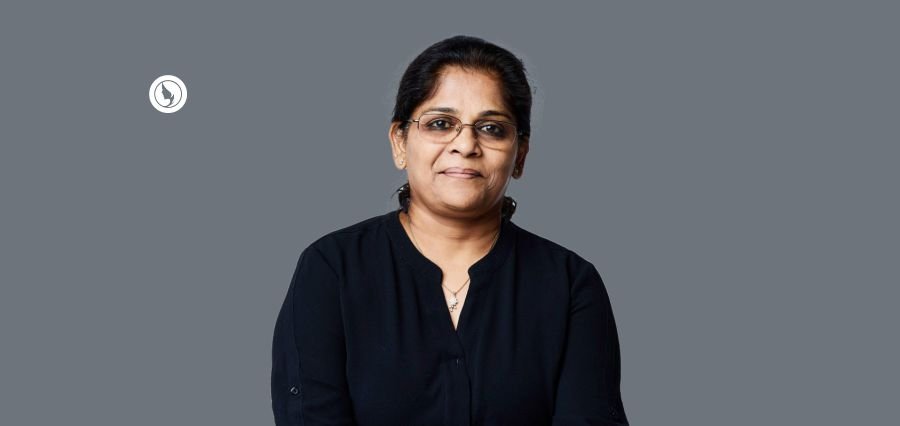
Sunitha Rao, Senior Vice President and General Manager of Hybrid Infrastructure at Hitachi Vantara, embodies this human-centred approach to technology leadership. Throughout her career, orchestrating large-scale transformations, she has operated from a singular conviction: hybrid cloud journeys are modern day human endeavours disguised as technical projects. Where others see platforms and operating models, she sees people navigating change, managing cognitive load, and striving to deliver value under relentless pressure.
This perspective crystallized during a pivotal moment early in her leadership tenure. She was overseeing a major platform transformation- architecturally sound, meticulously planned, and executed with precision. Yet adoption lagged. Escalations multiplied. Despite doing “everything right” technically, something fundamental wasn’t working. Instead of doubling down on execution velocity, she made an unconventional choice: she paused. She spent time with engineers and operators living inside the system daily, listening without an agenda.
What emerged wasn’t a story of missing features or performance gaps. It was a story of cognitive overload- teams drowning in fragmented tools, excessive handoffs, and the impossible mandate to maintain flawless operations while simultaneously modernizing infrastructure. That conversation recalibrated her entire leadership philosophy. She learned that the best hybrid cloud strategies don’t just optimize performance; they reduce cognitive load, simplify operations, and remove unnecessary barriers that slow human decision-making.
Today, she approaches hybrid cloud through the lens of outcomes, not infrastructure. By focusing first on impact—operational simplicity, risk reduction, and decision clarity—she enables teams to connect their work to real value. That clarity fuels stronger engagement and faster, more sustainable innovation.
Three Pillars of Sustainable Growth
Sunitha’s approach to hybrid cloud leadership rests on three interconnected principles that distinguish her work from conventional technology management.
First, she listens before building. Customers don’t embrace hybrid cloud because analysts recommend it; they embrace it because their environments are genuinely complex, tangled with legacy systems, regulatory constraints, security vulnerabilities, and mounting pressure to accelerate with fewer resources. Before defining roadmaps, she invests time understanding friction points: Where do teams experience resistance that slows decisions? What complexity can be eliminated rather than managed? This empathy isn’t soft leadership; it’s strategic intelligence. When design emerges from genuine understanding, innovation becomes an enabler rather than an obstacle.
Her second principle challenges conventional organizational scaling. As companies grow, instinct often drives leaders toward increased oversight- more approvals, more reviews, and more control mechanisms. Sunitha has learned that sustainable growth emerges from trust, not control. Her role involves articulating a clear vision with explicit priorities and outcomes, then empowering teams to execute with autonomy. When teams receive trust, they move faster, decide better, and innovate more confidently.
This doesn’t eliminate accountability; it shifts accountability from measuring activity to measuring impact.
“As a female leader, I’ve seen collaborative leadership underestimated,” she reflects. “In reality, it’s one of the most effective ways to scale. Empowered teams don’t need constant direction; they need what I call 3C’s Clarity, Context, and Confidence.”
The third principle involves measuring what genuinely matters. Revenue, adoption rates, and margins remain essential, but they don’t capture the complete story. When innovation truly works, its impact is beyond dashboards: customers gain confidence, not just capabilities. Teams experience less burnout and more pride. Operations become calmer, more predictable, and more resilient. She pays close attention to these signals because when innovation is people-centric, individuals feel its benefits before numbers fully reflect the transformation.
Navigating Disruption Through Adaptability
A defining test of Sunitha’s leadership philosophy arrived during a large-scale hybrid cloud transformation that intersected with the explosive emergence of AI workloads. Her team was modernizing a core data platform spanning on-premises environments, multiple public clouds, and an expanding software-defined layer when customer demand pivoted sharply toward AI training and inference pipelines.
The technical challenge proved formidable. Traditional workloads operated predictably with clear performance boundaries; AI pipelines operated in constant flux. Teams suddenly confronted high-throughput, low-latency data paths for GPU-based training, data gravity challenges across edge and cloud, mixed workload contention, and unprecedented operational demands around data movement and cost predictability.
Despite a solid architectural roadmap, execution began to strain. Some teams optimized for cloud-native elasticity, others for on-premises performance. Decision latency increased as centralized control attempted to force alignment. Teams felt pressure to lock designs in an environment that refused to stabilize.
Senior Vice President and General Manager of Hybrid Infrastructure Hitachi Vantara Sunitha restructured the entire approach around intentional adaptability. They separated the platform into layers requiring stability (core data services, control planes, governance) from layers needing flexibility (AI pipelines, data ingestion paths, GPU-adjacent workflows). Clear interfaces between layers allowed independent evolution without systemic fragility.
Critically, she pushed decision rights closer to teams building and running AI workloads. Engineers gained empowerment to make architectural trade-offs in real time, provided they adhered to platform guardrails around security, observability, and cost control.
This transformation unlocked momentum. AI workloads scaled across hybrid environments without introducing instability. Data pipelines became predictable. GPU utilization improved. Customers gained confidence that they could run AI workloads without destabilizing existing operations. “
Resilience in AI-driven hybrid cloud environments doesn’t come from rigid architectures or perfect foresight,” she explains. “It comes from designing platforms and organizations that can adapt continuously.”
Opening Doors for the Next Generation
As a senior woman leader in technology, Sunitha views leadership and empowerment as inseparable. She acknowledges progress in representation but knows that visibility without influence is insufficient. Empowerment is not about presence—it is about agenda-setting, strategic direction, and decision-making at scale.
She remains intentional about her presence in spaces where trade-offs are debated and hard decisions crystallize. When women see leaders who are technically credible, financially fluent, and confident without being performative, it expands the definition of leadership itself.
One of her most important realizations centres on the distinction between mentorship and sponsorship. Mentorship provides advice that helps people grow; sponsorship provides access that helps them advance. Women are often over-mentored and under-sponsored, particularly in technical environments. She actively sponsors women by advocating for them in promotion discussions, placing them in high-visibility roles, ensuring their contributions receive recognition, and putting her credibility behind their potential rather than just proven performance.
“Sponsorship requires leaders to take risks- to bet on people before they are fully ready,” she observes. “But innovation itself depends on learning in motion.
A Legacy Beyond Metrics
Today, Sunitha defines success less by personal achievements and more by what continues functioning well after she steps away. She measures leadership impact by resilience- of people, platforms, and organizations. Success looks like teams making good decisions without waiting for permission, leaders growing stronger over time, and cultures where people feel trusted, challenged, and supported.
Beyond boardrooms and business outcomes, what sustains her is witnessing people grow into versions of themselves they didn’t yet believe were possible. She finds energy in watching engineers step into leadership roles for the first time, teams navigate uncertainty and deliver outcomes they once thought beyond reach, and women find their voice in rooms where they once hesitated to speak.
As enterprises deepen their hybrid cloud journeys, Sunitha believes the next era will be defined less by technology choices and more by how leaders think, decide, and operate under continuous change. The future belongs to leaders who can hold complexity without amplifying it, drive change without exhausting teams, and innovate while remaining accountable to people, customers, and society.
Through her leadership at Hitachi Vantara, Sunitha continues proving that the most powerful innovation isn’t just about what we build. It’s about how it improves the experience of the people behind it. That conviction shapes not only her approach to hybrid infrastructure but her enduring impact on an industry learning to place humanity at the centre of technological transformation.